Montserrat, Spain: How to Shoot the Monastery Without the Crowds
A practical photo guide to Montserrat — the rack railway vs. cable car, the trail to Sant Jeroni, and the two hours of light that make the shot.
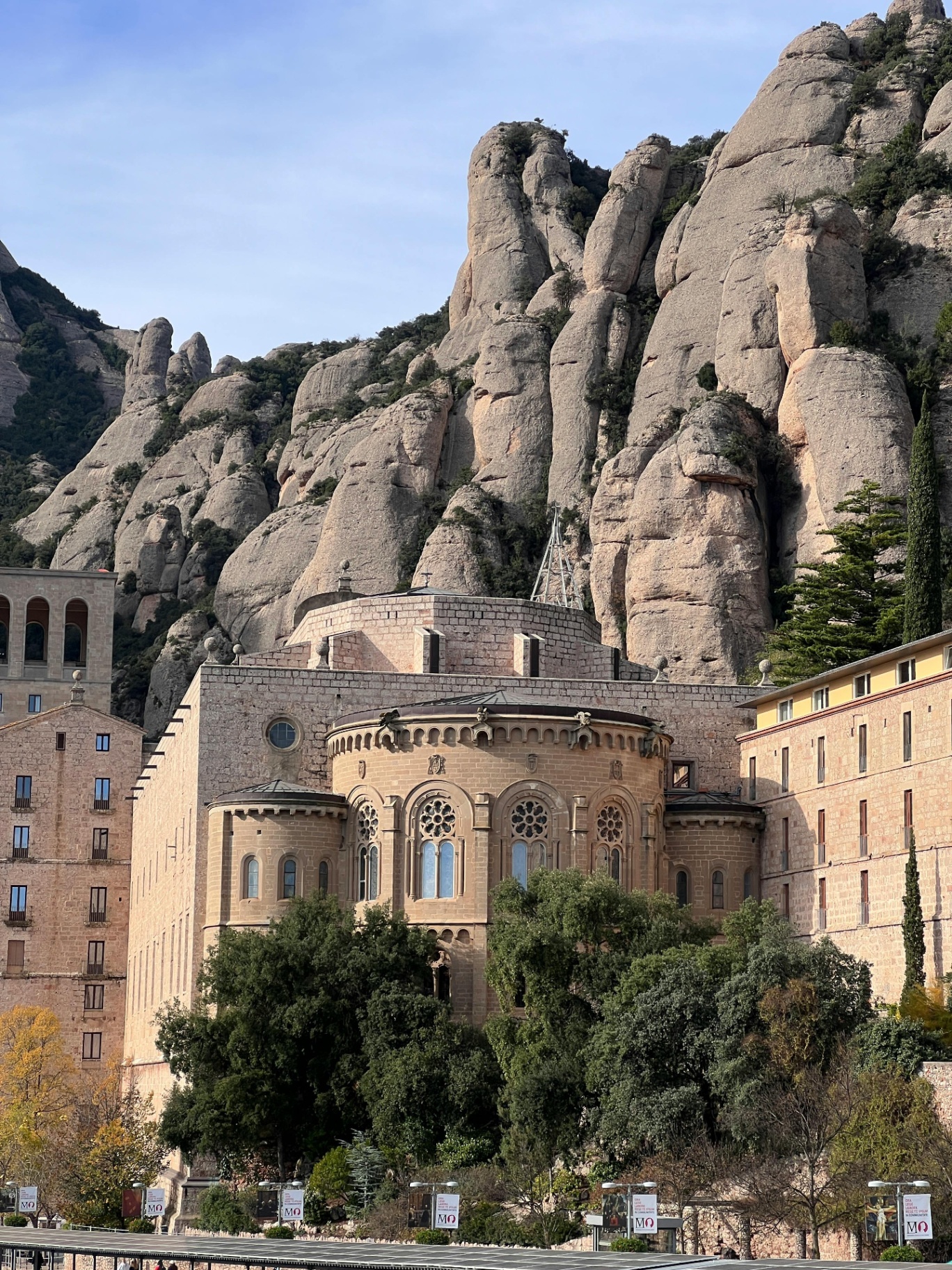
Montserrat is one of those places that looks fake the first time you see it — a thousand-year-old Benedictine monastery glued to the side of a mountain made of pinkish, finger-like rock formations, an hour outside Barcelona. The tourist buses figured it out a long time ago. Here's how to work around them.
Getting there matters for the photo
Most visitors take the R5 train from Plaça Espanya in Barcelona and then transfer to either the cremallera (rack railway) or the aeri(cable car). Photographers should always pick the cable car. It's older, smaller, and gives you a 5-minute scenic ride that climbs the cliff face. The light through the windows on the way up is unbelievable on a clear morning, and you get one of the rare establishing shots of the monastery from the side rather than from in front.
The rack railway is more comfortable and runs more often, but it approaches from behind a ridge and you arrive without ever seeing what you came to see.
The two-hour window
Tour buses start arriving around 10:30am and the monastery courtyard is packed by 11. They leave by 5pm. If you can be on the first cable car of the day (check the schedule — it changes seasonally), you get the courtyard nearly to yourself for about 90 minutes. Same in reverse at sunset.
The single best shot of the basilica facade is taken from the lower square looking up, with the mountain spires rising behind. At sunrise the sun is behind the mountain so the facade is in soft shadow — exactly the flat, even light a 16th century stone wall needs. At noon the contrast is brutal and every photo looks like a real-estate listing.
Go up. Always go up.
The monastery is the postcard, but the real photographs are above it. Take the Funicular de Sant Joan another 250 meters up the cliff. From the top, two trails:
- Sant Joan loop (45 min). Easy, paved in places, with several lookouts back down onto the monastery from above. This is the iconic aerial-style shot you've seen on Instagram, taken from the ground.
- Sant Jeroni (2.5 hours round trip). The summit of the massif at 1,236m. The trail is well-marked and not technical, but bring water — there's none on the way. On a clear day you can see the Mediterranean to the east and the Pyrenees on the northern horizon.
What to photograph beyond the obvious
- The rock formations themselves. Montserrat means "serrated mountain" in Catalan. Get close. The conglomerate texture — pebbles cemented into a vertical wall — is its own subject.
- The Escolania boys' choir. One of the oldest in Europe, they sing in the basilica around 1pm most days. Photography during the performance is restricted, but the procession into and out of the church is a strong portrait opportunity if you ask permission politely.
- The candlelit votive room. Adjacent to the Black Madonna chapel. Hundreds of candles, deep shadows, and almost always empty for a few minutes at a time. Push your ISO; resist the flash.
Drone reality check
Montserrat is a protected natural park. Recreational drone flights are prohibited across the entire massif without an explicit permit from the Parc Natural de la Muntanya de Montserrat. The aerials you see online were either shot before enforcement tightened, by licensed operators with a permit, or — quite often — illegally. Don't add to that list. The ground-based vantage points are good enough that you won't miss the bird's-eye view.
A note on respect
Montserrat is a working monastery. Monks live there. The basilica is a place of worship before it is a backdrop. Keep your shutter quiet inside, don't aim a camera at someone's face during prayer, and skip the courtyard shoot when there's a service ending. The photos you do come away with will be better for it.
Practical logistics: tickets, times and costs
From Barcelona, the R5 line leaves Plaça Espanya roughly hourly and takes about an hour to Montserrat Aeri (cable car) or Monistrol de Montserrat (rack railway). Buy the combined return ticket at the station rather than separate legs — it's cheaper and it saves queueing again at the top station on the way down. If you plan to use the Sant Joan funicular as well, the TransMontserrat pass covers train, cable car and both funiculars in one ticket.
Budget roughly €25–40 per person depending on which pass you take, plus €12–15 for the museum if you want the Caravaggio and the Catalan modernist collection. The abbey itself is free to enter. Cash is rarely needed; cards work everywhere including the funicular kiosks.
One scheduling trap: the cable car closes for maintenance for a stretch of the winter, usually in February, and the replacement is a bus that adds 30 minutes. Check the operator's calendar before committing to a sunrise plan, because a cancelled first car means arriving after the light is gone.
Where to stay if you shoot sunrise
There is no way to reach the monastery from Barcelona in time for first light — the earliest train arrives well after sunrise for most of the year. If dawn matters, stay on the mountain. Hotel Abat Cisneros sits inside the abbey complex, and the Cel·les Abat Marcet apartments next door are cheaper and better for a photographer with gear to spread out. Both are quiet after the last bus leaves, which is the whole point.
The alternative is Monistrol de Montserrat in the valley, half the price, with the first rack railway of the day getting you up in time for shoulder light rather than true sunrise. Acceptable compromise, not the same photo.
A realistic one-day shooting plan
- First cable car. Shoot the ride up, then the basilica facade in shadow from the lower square while the courtyard is empty.
- 08:30–10:00. Funicular de Sant Joan, then the loop trail for the down-onto-the-monastery frames before haze builds.
- 10:00–12:30. Sant Jeroni if the air is clear; otherwise work the rock formations close-up, where flat midday light is actually fine.
- 13:00. Escolania choir in the basilica, then lunch and the candlelit votive corridor while tour groups are eating.
- 17:00 onward. Buses leave; the courtyard reopens to you. Work golden hour on the facade and stay through blue hour for the lit-monastery frame almost nobody has.
For the other half of a Catalunya trip — coast, aerials and marina work — see the Costa del Sol drone route, and my editing workflow covers what happens to these files once the trip ends.
Montserrat FAQ
Is Montserrat worth visiting for photography?
Yes — but not for the reason most people go. The basilica is beautiful and every guidebook covers it, but the shot that pays back the day is the ridgeline light: the serrated Montserrat massif catching low sun with the plain of Catalunya rolling out behind it. Ride the funicular to Sant Joan, walk twenty minutes past the last viewing platform, and you're alone with the best angle in the park. If you only have time for one thing, it's that walk.
How long should I stay at Montserrat?
A day trip works if you leave Barcelona on the first R5 train (around 8:36 from Plaça Espanya), but you'll be chasing light. For photography I recommend overnighting at the on-site hotel or the abbey guest rooms. Sunrise from the upper trails, with the plain still fogged in and the monastery lit from below, is worth the extra night alone.
Can I fly a drone at Montserrat?
No — the entire massif sits inside a Natural Park and the abbey grounds are controlled airspace. Recreational drone flight is prohibited without a specific permit from the park authority and the Generalitat. Don't try to sneak a flight past the funicular station; there are cameras and rangers, and fines are real. For the legal framework across the EU, see my EASA Open Category guide.
What is the best month to photograph Montserrat?
October and April. Both give you clear air after summer or winter, mid-teens temperatures, and low-angle light through the middle of the day that carves the rock formations properly. July is hazy and crowded; January is often socked in with cloud that never lifts above the abbey.
Is Montserrat suitable for beginners?
The upper trails are steep but well marked and mostly on gravel — no scrambling required to reach any of the classic viewpoints. Bring proper shoes (not trainers), a litre of water per person, and start early enough that afternoon heat doesn't punish you on the way back down. There is water at the funicular top station.
Looking for the rest of the Spain set? My Costa del Sol drone route covers the coastal half of the same trip. For licensing or commissioned coverage of Catalunya, the contact page is the fastest way to reach me.