Dolomites Road Trip: 1-Week Itinerary from Germany, Austria & Poland (2026)
A photographer's 7-day Dolomites road trip itinerary — drive routes from Munich, Vienna, and Kraków, tolls & vignettes, best bases in Val Gardena and Cortina, and day-by-day stops from Seceda to Tre Cime.
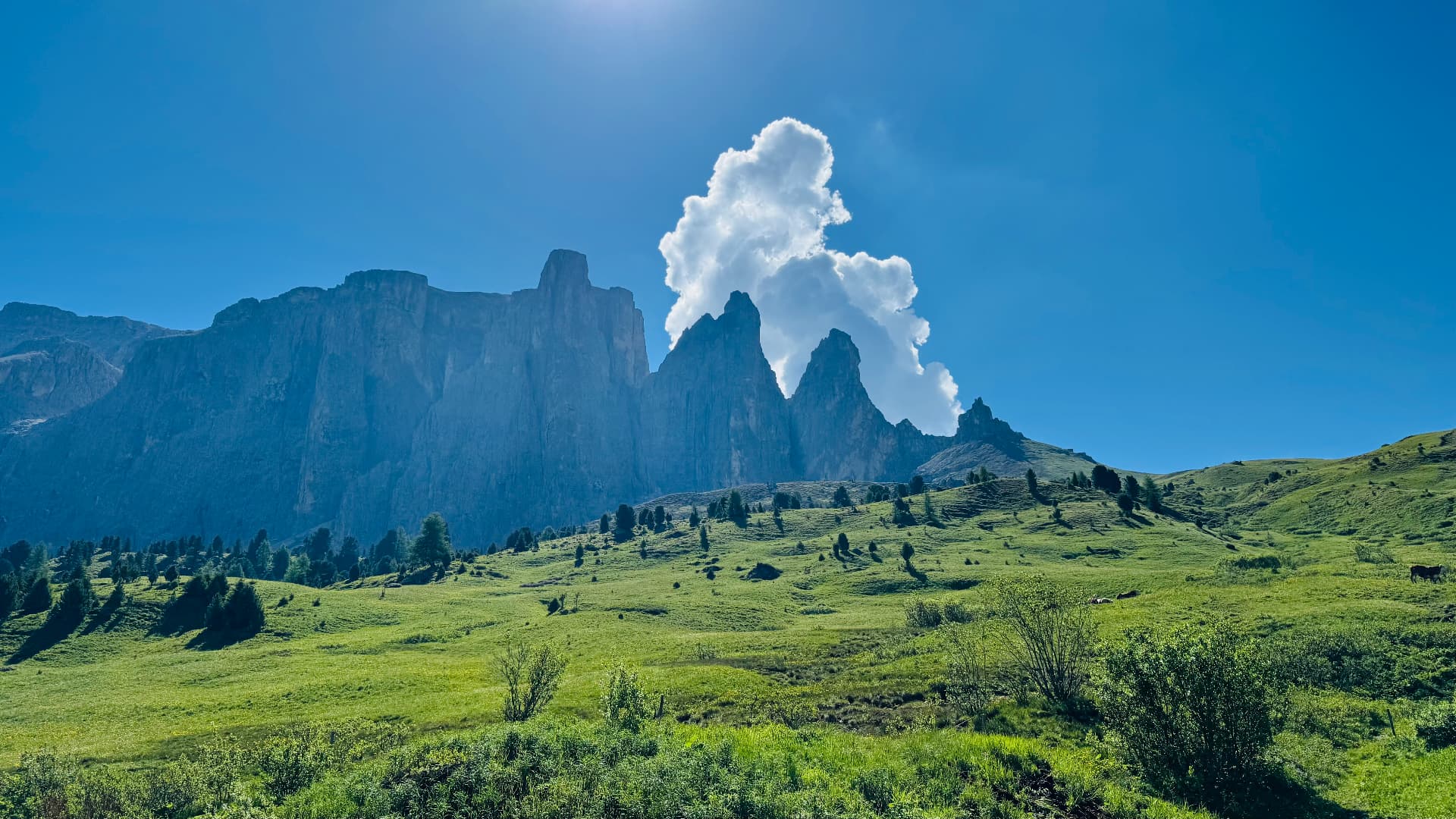
The Dolomites are the best week-long road trip in Europe, and I'll die on that hill. In seven days you can drive between turquoise lakes, ride cable cars to razor-sharp ridges, sleep in family-run rifugi at 2,000 metres, and cross three of the highest paved passes in the Alps — without ever hitting a motorway if you don't want to. This guide is written for people driving in from Germany, Austria, and Poland specifically, because that's the vast majority of road-trippers here and the logistics (tolls, vignettes, border timing) are different for each country.
Where the Dolomites are (and which base town is right for you)
The Dolomites are a mountain range in the northeastern Italian Alps, spread across South Tyrol, Trentino, and Belluno. It's a UNESCO World Heritage site and roughly the size of a small country — you can't "see it all" in a week, but you can loop the highlights.
The three sensible bases for a 7-day loop:
- Val Gardena (Ortisei / Selva) — western Dolomites. Best for Seceda, Alpe di Siusi, Sassolungo, and the Sella Pass loop. Widest range of hotels, good food scene, feels Austrian (German is spoken more than Italian).
- Cortina d'Ampezzo — eastern Dolomites. Best for Tre Cime, Lago di Braies, Lago di Sorapis, Cinque Torri. Fancier, more expensive, feels more Italian.
- Alta Badia (Corvara / San Cassiano) — the middle. A compromise base if you want one hotel for the whole trip, but you'll drive further every day.
My recommendation for this itinerary: 4 nights in Val Gardena, then 3 nights in Cortina. You move once, mid-trip, and it halves your daily driving time.
How to drive to the Dolomites
From Munich, Germany (≈ 4 hours)
The most common approach. A8 → A93 → Kufstein → cross into Austria → Brenner Pass (A13) → cross into Italy → A22 south → exit Chiusa/Klausen for Val Gardena, or stay on A22 further south for Cortina (exit at Bressanone and cut east through Val Pusteria).
- Austrian vignette — required the moment you cross the German border. €12.40 for 10 days (2026). Buy the digital "e-vignette" online at least 18 days ahead, or a paper one at any petrol station on the German side.
- Brenner toll — about €11 southbound (the pass itself, separate from the vignette).
- Italian A22 toll — pay-as-you-go; take a ticket at entry, pay at exit. Roughly €5–8 depending on where you exit.
From Salzburg / Vienna, Austria (≈ 4–6 hours)
From Salzburg the fastest way is A10 → Felbertauern Tunnel (€13 toll, cash or card) → Lienz → SS49 across Val Pusteria to Dobbiaco/Toblach. This drops you closer to Cortina, so consider flipping the itinerary and starting there.
From Vienna, the A1 → A10 route matches Salzburg above, or go via Brenner if you're doing the Val Gardena side first (adds ~1 hour but cheaper tolls).
From Kraków / Wrocław, Poland (≈ 10–12 hours)
This is a two-day drive, don't try to do it in one. From Kraków or Wrocław, head south via Czech Republic (D1 → Brno → Bratislava) or directly through Slovakia into Austria. Overnight either in Vienna or Salzburg, then continue the next morning via Felbertauern (see Austrian route above).
Polish drivers: you don't need a Czech or Slovak vignette on the D1/D2 corridor toward Bratislava if you route via Vienna, but you do need Austrian and Italian tolls. The cheapest legal setup is Austrian digital e-vignette + Italian pay-as-you-go tickets.
ZTL zones — the one Italian rule that ruins road trips
Italian historic centres have ZTL (restricted traffic) zones. Driving into one accidentally is a €90+ fine per crossing, and you'll get the ticket in the post months later. Cortina d'Ampezzo has a ZTL in the centre. Ortisei's centre is pedestrianised in summer. Always park at your hotel's designated lot or a public garage on the edge of town — never drive into the old centre "just to unload."
When to visit the Dolomites
- Late June – early July: Wildflowers everywhere, snow still on the north faces, long days. Cable cars have all opened.
- Mid-July – August: Warmest, busiest, most expensive. Book everything 3+ months out.
- September: My pick. Green meadows, clear air, crowds gone after the first week, dramatic afternoon clouds around the peaks.
- October – mid-November: Larches turn gold, but many cable cars close for maintenance from late October.
- Winter: A different (excellent) trip — Dolomiti Superski, not this itinerary. Winter tyres or chains are legally required Nov 15 – Apr 15 on many roads.
The 7-day Dolomites road trip itinerary
Day 1 — Drive in, arrive Ortisei (Val Gardena)
Leave home early. From Munich you're at your Ortisei hotel by mid-afternoon; from Vienna or Poland it'll be evening. Don't try to squeeze a hike in on arrival day — you're tired and the mountains aren't going anywhere. Park the car, walk the pedestrian Rezia street for dinner (try Concordia for local South Tyrolean food), early bed.
Day 2 — Seceda ridge + Col Raiser loop
The signature Dolomites view. Take the two-stage cable car from the centre of Ortisei up to Seceda (2,500 m), walk 10 minutes to the classic viewpoint, then hike down via trail 2A → Rifugio Firenze → Col Raiser cable car back to Santa Cristina. Bus back to Ortisei. Full logistics, ticket prices, and photo tips are in my Seceda field guide.
Day 3 — Alpe di Siusi sunrise + Sella Pass drive
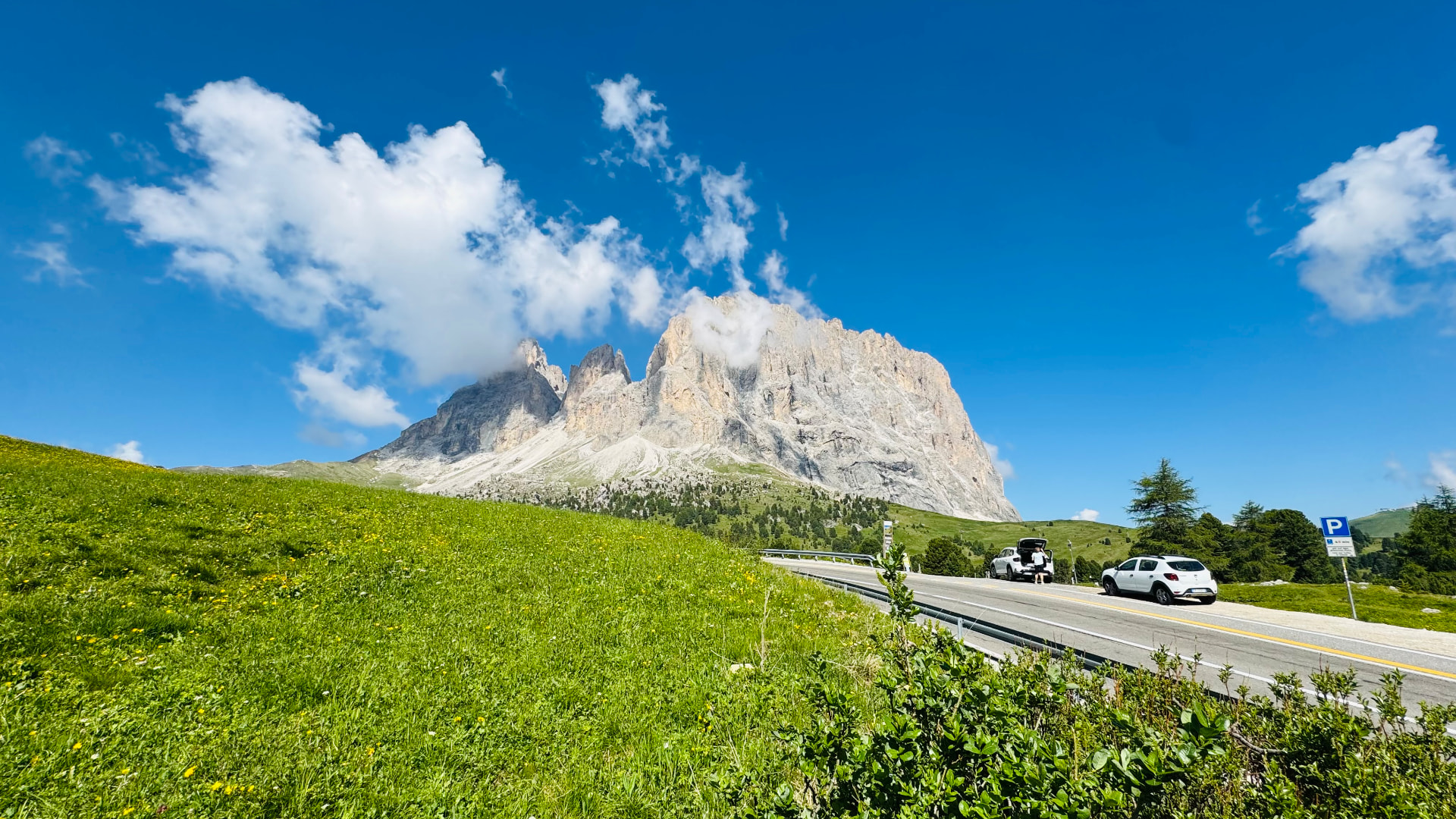
Wake at 4:30. Drive up to Compatsch (private cars are allowed on the road up to Alpe di Siusi only before 9am and after 5pm — this is enforced) and shoot sunrise on Europe's largest alpine meadow with Sassolungo behind. Coffee back in Ortisei, then in the afternoon drive the Sella Pass loop: Passo Gardena → Passo Sella → back via Val di Fassa. It's 90 km of pure driving joy — hairpins, rifugi at every pass, and Sassolungo dominating the skyline the whole way.
Day 4 — Great Dolomites Road: transfer Ortisei → Cortina
Check out of Val Gardena, load the car, and take the scenic route east instead of the motorway: Passo Gardena → Corvara → Passo Campolongo → Passo Pordoi → Passo Falzarego → Cortina. This is the historic "Great Dolomites Road" (SS48). About 4 hours' driving, double it with stops. Key pullouts: the hairpin viewpoint above Corvara, the Sass Pordoi cable car at Pordoi (fastest way to 2,950 m in the Dolomites), and Cinque Torri just before Cortina — a short walk from the Bai de Dones car park to a WWI open-air museum with unreal spires. Check into Cortina, dinner in town.
Day 5 — Tre Cime di Lavaredo + Lago di Misurina
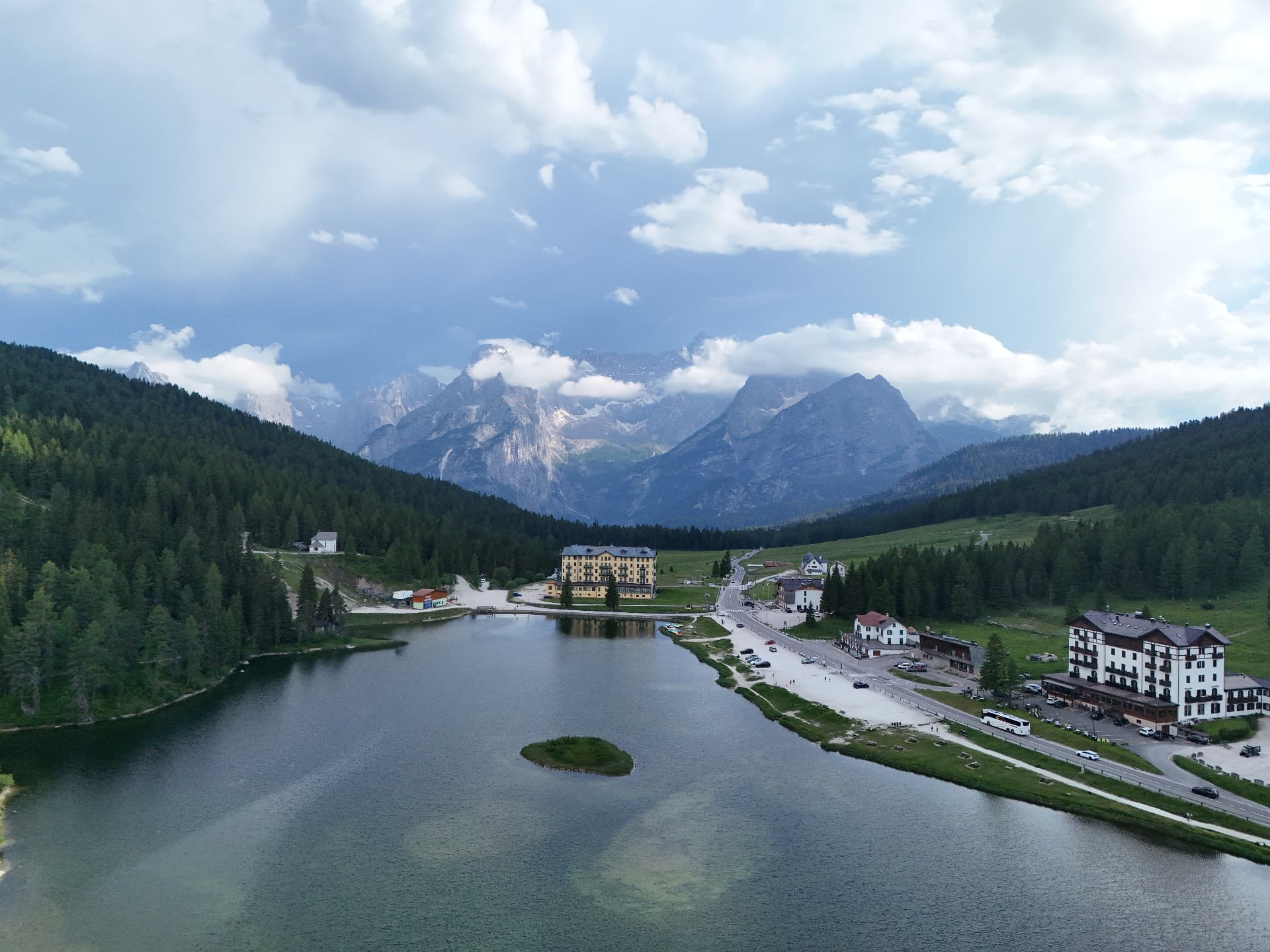
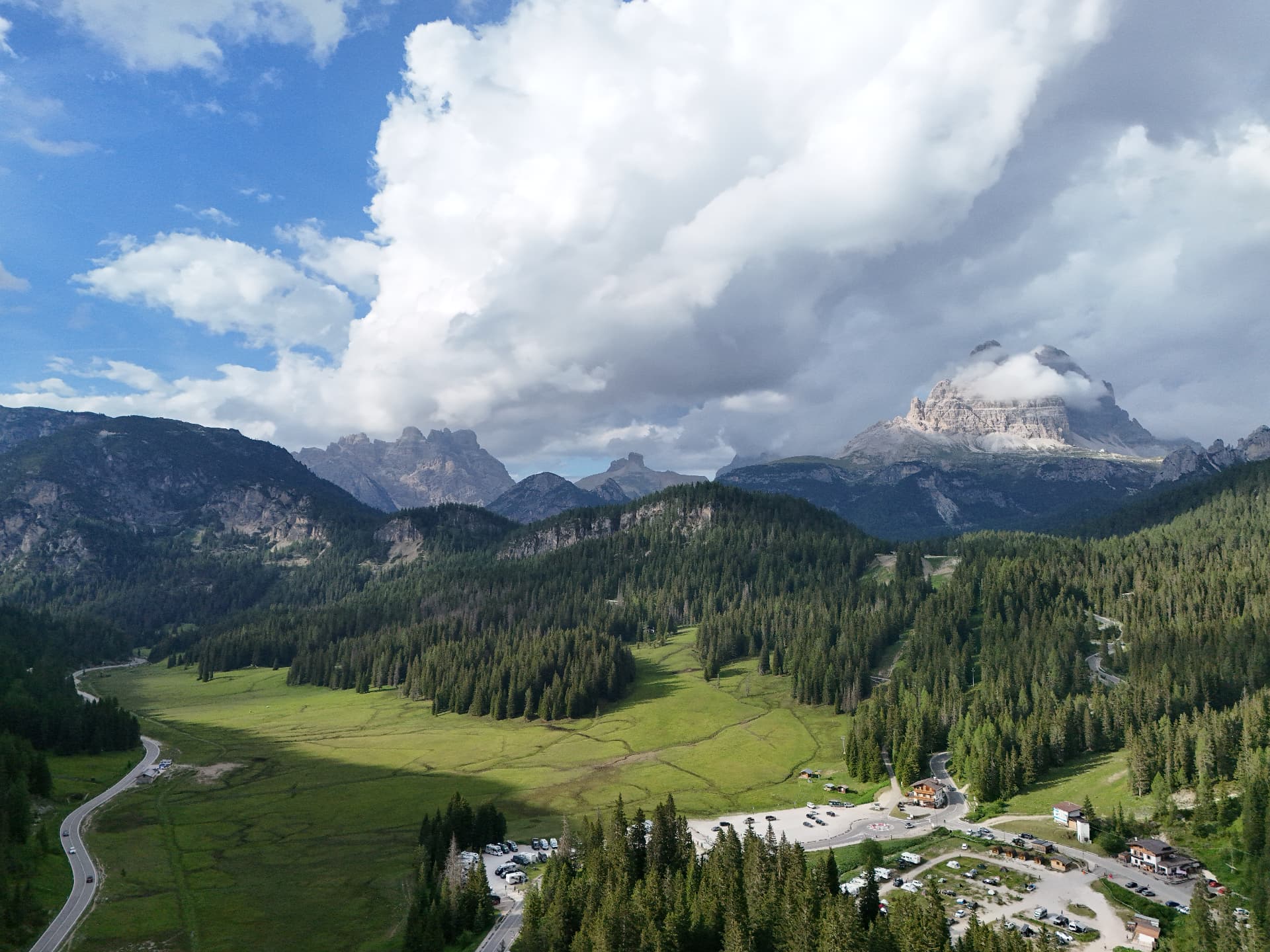
The other essential Dolomites day. Drive from Cortina to Misurina (25 min), stop at the lake for the classic view (below), then continue up the Rifugio Auronzo toll road (€30 per car in 2026, cash preferred — arrive before 9am or after 3pm or the road fills up and they turn cars away). Hike the 10 km loop counter-clockwise: Rif. Auronzo → Rif. Lavaredo → Rif. Locatelli (best view) → back. Allow 4–5 hours with photo stops. Full breakdown in my Tre Cime hike guide.
Day 6 — Lago di Braies + Lago di Sorapis
Sunrise at Lago di Braies (Pragser Wildsee) — the turquoise lake with the wooden boathouse. From Cortina it's ~45 minutes. Between July 10 and September 10 the access road is closed to cars from 9:30am to 4pm — arrive before 8am, or shuttle from Dobbiaco. Rent a wooden rowboat (€27 for 30 minutes) once you've shot the classic angle.
Afternoon: hike to Lago di Sorapis — 6.5 km round trip from the Passo Tre Croci car park, moderate difficulty, milky-turquoise glacial lake at the end. If you'd rather stay flat, swap in Cinque Torri (if you didn't do it on Day 4) or the Rifugio Scoiattoli viewpoint.
Day 7 — Drive home
Slow morning in Cortina, buy speck and cheese at the covered market, then drive out. Route depends on where you're heading:
- To Germany / western Austria: Cortina → Dobbiaco → Val Pusteria → A22 north → Brenner. About 5 hours to Munich.
- To Vienna / Poland: Cortina → Dobbiaco → Lienz → Felbertauern → Salzburg or Villach. About 4h to Salzburg, add another 6–7h from there to Kraków (again, overnight halfway).
Budget: what a week in the Dolomites actually costs (2026)
Per person, sharing a room, mid-range:
- Lodging (6 nights, 3-star hotels): €90–130/night ÷ 2 = €270–390
- Fuel (round trip from Munich): €120–160
- Tolls, vignette, Brenner: €40–60
- Cable cars (Seceda + Pordoi + optional): €90–120
- Tre Cime toll road: €15/person (split between 2)
- Food (dinner ~€25, lunch ~€15): €280
- Parking, misc: €40
Rough total per person: €850–1,050 for a week, not counting flights if you're flying to the start. From Poland add another €80–120 in fuel and one overnight stop.
Where to sleep
Val Gardena — Ortisei:
- Mid-range: Hotel Rodella, Cavallino Bianco (family), Villa Emilia — €120–180/night in July.
- Splurge: Adler Spa Resort — €400+/night, worth it for one night if you want the full South Tyrolean spa experience.
Cortina d'Ampezzo:
- Mid-range: Hotel Ambra, Hotel Menardi — €150–220/night.
- Splurge: Rosapetra Spa Resort — €400–600/night, best views from a Cortina hotel.
Rifugios on the trail: Rifugio Locatelli (Tre Cime), Rifugio Firenze (Seceda), Rifugio Auronzo — €70–110 per person half board. Book 3–6 months out; they release in January.
What to pack for a Dolomites road trip
- Car: winter tyres or snow chains Nov 15 – Apr 15, reflective vest (mandatory in Italy), warning triangle, spare bulbs. High-clearance not needed — every pass is paved.
- Clothes: hiking shoes with grip (not sneakers), light insulated jacket even in August (2,500 m is cold), shell for rain, sun hat and sunglasses (glare at altitude is intense), swimwear for lakes and hotel spas.
- Camera: wide (16–24 mm) for lakes and ridges, mid zoom (24–70 mm) for landscapes, telephoto (70–200 mm) for compressed peak shots. Polariser saves lake photos. Two batteries — cable cars drain them fast.
- Other: refillable water bottle, €50–100 cash for rifugi and toll roads, EU roaming SIM or eSIM (data works in most valleys but drops on passes).
Common mistakes to avoid
- Booking one base for the whole week. The Dolomites are wider than they look on a map — an hour to Tre Cime from Ortisei becomes 2.5 hours in July traffic. Split the trip.
- Ignoring ZTL zones. Don't drive into old centres. If your hotel is inside a ZTL, they'll register your plate for a permit — email them your registration in advance.
- Underestimating pass drive times. Google Maps assumes you never stop. In practice, every pass has three viewpoints you'll pull over for. Double every estimate.
- Flying a drone in the Nature Parks. Puez-Odle, Tre Cime, Dolomiti Bellunesi — all require permits, and enforcement is real (park rangers issue fines on the spot). If you want to fly legally in the EU, read my EASA Open Category guide first.
- Only shooting golden hour. Storm light in the Dolomites (mid-afternoon thunderstorm build-ups in July/August) is often better than sunset. Stay on the ridge when clouds roll in.
FAQ
Do I need a 4x4 or SUV for the Dolomites?
No. Every road on this itinerary is paved and served by regular sedans. The only exception is winter, when you need winter tyres or chains regardless of the car.
Can I do the Dolomites without a car?
Yes, but with big compromises. The Val Gardena Mobil Card (included with most hotel stays) gives you free buses and cable cars across South Tyrol. Between valleys, the SAD bus network is decent. You'd lose the Great Dolomites Road day and half of Cortina's lakes — it's a car trip.
What's the closest airport?
Innsbruck (INN) is closest at ~2 hours to Val Gardena. Then Verona (VRN), Venice (VCE), and Munich (MUC), all about 3–3.5 hours. Bolzano (BZO) is tiny but 1 hour away. Renting a car is easiest from Innsbruck or Verona.
What language do people speak?
Officially trilingual: German, Italian, and Ladin. In Val Gardena and the western Dolomites German is dominant; in Cortina Italian. English works everywhere in tourism — hotels, restaurants, cable car staff — but a "grüß Gott" or "buongiorno" goes a long way in the villages.
Is one week enough for the Dolomites?
For the highlights, yes — this itinerary hits the shots most people come for. To actually feel like you've explored, you'd want 10–14 days and time to sleep in a couple of rifugi. But a week is enough to fall in love and know you'll come back.
The bottom line
The Dolomites reward planning. Book your hotels early, pre-buy your Austrian vignette, split your base between Val Gardena and Cortina, and pace the day-drives so you're not eating dinner at 10pm. Do that, and the seven days above are one of the most beautiful drives in Europe.
Building your own Dolomites trip and want me to shoot it? Head to the contact page for commissioned travel and landscape work — or read the deep-dive guides for Seceda and Tre Cime di Lavaredo before you go.