Toronto Travel Guide: What to See, Where to Stay, and How to Plan
Plan a Toronto trip: CN Tower, Toronto Islands, markets, neighbourhoods, best season, transport, a 3-day itinerary and a Niagara Falls day trip.
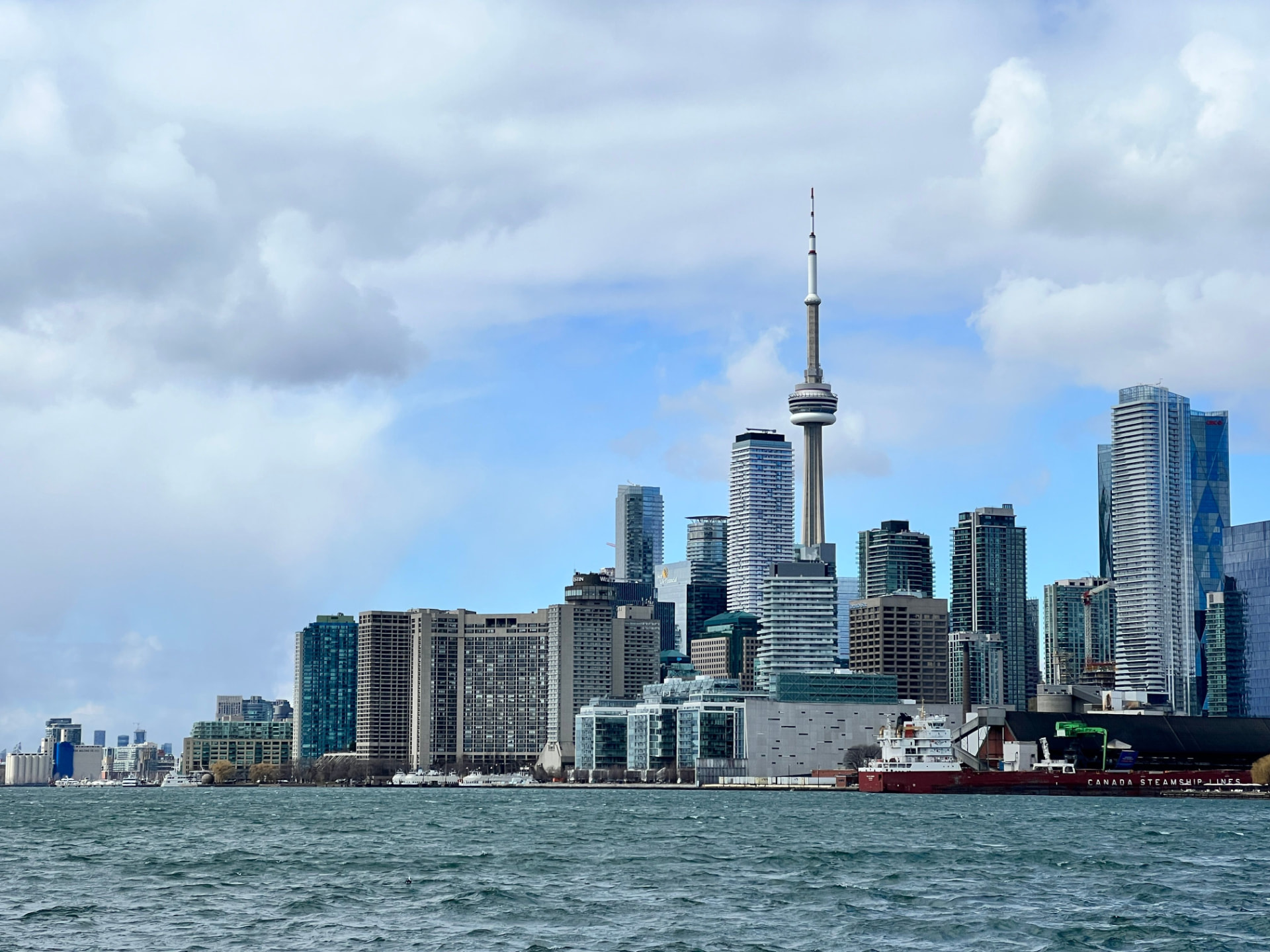
Cover photo: the Toronto skyline and CN Tower across the harbour on a windy spring-like day. Photo: Hameem Russel.
Toronto is Canada's largest city and one of the most diverse places on the planet — roughly half of its residents were born outside the country. That mix shows up everywhere: in the food, the festivals, the dozens of languages you hear on a single streetcar ride. Add a lakefront, a car-free island park fifteen minutes from downtown, and Niagara Falls within easy reach, and you have one of North America's most rewarding city breaks.
I took the cover photo from the water side of the city, where the CN Tower and the downtown towers stack up behind the harbour. That view is the best introduction to Toronto: big, modern and busy, but always next to the lake. This guide covers what to see, when to go, how to get around, and a practical three-day plan.
A short history of Toronto
Long before Europeans arrived, the land around today's Toronto was a meeting and trading place for Indigenous peoples, including the Haudenosaunee, the Anishinaabe and the Mississaugas of the Credit. The name "Toronto" is usually traced to a Mohawk word often translated as "where there are trees standing in the water".
In 1793 the British founded the town of York here, which became the capital of Upper Canada. American forces burned parts of it during the War of 1812. In 1834 the town was incorporated as the City of Toronto, and through the 19th and 20th centuries it grew on rail, industry, finance and waves of immigration. The modern city was formed in 1998 when its surrounding municipalities were amalgamated. Today it is the country's financial centre and the capital of the province of Ontario.
Top things to see in Toronto
CN Tower
At 553 metres, the CN Tower dominated the world's tallest-structure lists for decades and still defines the skyline. The main observation level has a glass floor, and the seasonal EdgeWalk lets harnessed visitors walk around the outside of the tower's main pod. Book timed tickets online, and aim for late afternoon so you see the city in daylight and after dark. Check current prices and hours before you go.
Toronto Islands
A short ferry ride from the Jack Layton Ferry Terminal takes you to a chain of small islands with beaches, bike paths, a historic lighthouse and the classic skyline view. Centre Island is the busiest; Ward's Island is quieter and residential; Hanlan's Point has a long beach. Rent a bike or simply walk the boardwalk. Ferries get crowded on summer weekends, so go early.
Harbourfront and the waterfront
The lakefront west of the ferry docks has galleries, a music garden, boat tours and long walking paths. It is a free and easy way to spend an evening, and the place to start if you want sunset light on the water.
St. Lawrence Market
One of the city's oldest institutions, this market hall is the place to try Toronto's signature peameal bacon sandwich, along with cheese, baked goods and seafood. The South Market is open most days except Monday — check current hours, as weekend mornings are busiest.
Distillery District
A pedestrian-only area of restored Victorian industrial buildings, once one of the largest distilleries in the world. Today it holds galleries, cafés, boutiques and a popular winter Christmas market. The brick lanes are great for photography.
Kensington Market
A compact, colourful neighbourhood of vintage shops, small food stalls, murals and independent cafés. It feels nothing like the glass towers of downtown, and that contrast is the point. On some summer Sundays, parts of the area close to cars.
Royal Ontario Museum and Art Gallery of Ontario
The ROM is Canada's largest museum of world culture and natural history, known for its crystal-shaped extension. The AGO, redesigned by Frank Gehry, has a strong collection of Canadian art and a striking spiral staircase. Both are excellent rainy-day options.
Casa Loma
An early-20th-century castle-style mansion on a hill north of downtown, with towers, secret passages and formal gardens. It is a little theatrical, and most visitors enjoy it exactly for that reason.
Neighbourhoods worth exploring
- Chinatown (Spadina Avenue) — busy, affordable and full of noodle and dumpling spots, right next to Kensington Market.
- Queen Street West — independent shops, street art and Graffiti Alley.
- Little Italy and Little Portugal — patios, bakeries and relaxed evenings along College and Dundas streets.
- Yorkville — upscale shopping, galleries and cafés near the ROM.
- The Beaches — a long lakeside boardwalk in the east end, great on a summer afternoon.
Best time to visit Toronto
- Summer (June–August): warm, lively and full of festivals, patios and island days. Also the busiest and most expensive season.
- Autumn (September–October): my favourite balance — comfortable temperatures, fall colours in the ravines and parks, and the Toronto International Film Festival in September.
- Winter (December–March): cold and often snowy. Good for museums, Christmas markets and skating, and much cheaper for hotels.
- Spring (April–May): changeable and windy, as the cover photo shows, but quieter. Cherry blossoms in High Park usually bloom in late April or early May.
Getting there
Most international flights land at Toronto Pearson (YYZ). The UP Express train connects Pearson to Union Station downtown in about 25 minutes. Billy Bishop Toronto City Airport (YTZ), on the Toronto Islands, handles regional flights and is reached by a short pedestrian tunnel from the mainland. Long-distance trains (VIA Rail) and many buses arrive at or near Union Station.
Many visitors need an eTA or a visa to enter Canada. Check the official Government of Canada website for your nationality well before you travel.
Getting around
- TTC — subway, streetcars and buses cover the city. You can pay by tapping a credit or debit card or phone, or with a PRESTO card.
- Walking — downtown, the waterfront and nearby neighbourhoods are very walkable.
- Bike Share Toronto — useful along the lakefront trails.
- Ferries — city ferries and private water taxis run to the Toronto Islands.
- Car — only worth it for day trips; downtown traffic and parking are expensive.
A 3-day Toronto itinerary
Day 1: Downtown and the CN Tower
Start with breakfast at St. Lawrence Market, then walk through the Distillery District. In the afternoon, head to the waterfront and Harbourfront. Go up the CN Tower near sunset, then have dinner in the Entertainment District or catch a game if one is on.
Day 2: Neighbourhoods and museums
Spend the morning at the ROM or AGO. After lunch, wander through Chinatown and Kensington Market, then continue to Queen Street West and Graffiti Alley. Finish with dinner in Little Italy or Little Portugal.
Day 3: Toronto Islands
Take an early ferry, rent a bike and loop the islands. Stop at the beaches and at the skyline viewpoints facing the city. Return in the late afternoon for golden light on the towers, then visit Casa Loma or the Beaches boardwalk if you still have energy.
Optional: Niagara Falls day trip
Niagara Falls is roughly 90 minutes to two hours away by car, bus or GO Transit train, depending on the season and traffic. Add a stop in Niagara-on-the-Lake for wineries and a historic main street. I wrote a separate Niagara Falls field guide with timing and viewpoint tips.
What to eat in Toronto
- Peameal bacon sandwich at St. Lawrence Market
- Poutine — fries, cheese curds and gravy
- Butter tarts, a classic Canadian pastry
- Jamaican beef patties, a local staple
- Dim sum, ramen, Korean barbecue, Portuguese custard tarts — the city's diversity is its menu
Where to stay
- Downtown / Financial District — central and close to Union Station; best for a first visit.
- Entertainment District and King West — restaurants, nightlife and theatres.
- Yorkville — quieter and more upscale.
- Near a subway line — staying further out can save money without losing much time.
Budget tips
Toronto is not a cheap city, especially for hotels in summer. To keep costs down: travel outside peak months, use public transit instead of taxis, eat at markets and food courts, enjoy the many free parks and waterfront walks, and look at the CityPASS-type bundles if you plan to visit several paid attractions. Prices change often, so check current rates before you go.
Photography and drone tips
- The classic skyline shot is from the Toronto Islands or the water, with the CN Tower centred among the towers — exactly the kind of view in my cover photo.
- Wind over Lake Ontario creates textured waves that add movement to the foreground; a fast shutter keeps them crisp.
- Blue hour, when the tower lights come on, works beautifully from the islands and the waterfront.
- Drones: downtown Toronto sits close to Billy Bishop airport and Pearson, so much of the city is controlled airspace. Canadian rules from Transport Canada apply, including registration and pilot certification for most drones. Check NAV Drone or official maps and local park rules before flying. See my EU drone rules guide for comparison — Canadian rules are different.
Safety and practical tips
- Toronto is generally safe; use normal city awareness at night and on transit.
- Tipping is expected: around 15–20% in restaurants.
- Prices shown usually exclude sales tax (13% HST in Ontario).
- Bring layers — lake wind can make any season feel colder.
- Book CN Tower and island ferry times early in summer.
FAQ
How many days do you need in Toronto?
Three days covers the main sights comfortably. Add a fourth for a Niagara Falls day trip.
Is Toronto worth visiting?
Yes — for its food, neighbourhoods, waterfront and easy access to Niagara Falls, it is one of the best city breaks in North America.
What is the best free thing to do?
Walking the waterfront and exploring Kensington Market cost nothing. The ferry to the islands is inexpensive and gives the best skyline view.
Can I visit Niagara Falls from Toronto without a car?
Yes. GO Transit trains and buses, plus many tour companies, connect Toronto with Niagara Falls.