Berlin Travel Guide: What to Visit & How to Plan
Berlin travel guide — Brandenburg Gate, Museum Island, the Wall memorials and Reichstag dome, the best time to visit, and a practical 3-day plan.
Berlin is not a postcard city. It has no single perfect square you photograph once and tick off, and that puts some people off on day one. What it has instead is layers: Prussian boulevards, a rebuilt Mitte, a scar where the Wall ran, Soviet-era concrete, and then a food and nightlife culture built by everyone who moved here afterwards. You read the twentieth century off the streets here more directly than anywhere else in Europe.
I've shot Berlin in April sun and in flat, cold November light, and the city takes both — the grey version is arguably more honest. This is a working guide: the history you can walk to, everything worth visiting, when to come, how to get around on one ticket, and a three-day plan that doesn't leave you crossing the city four times a day.
A short history you can see on foot
Berlin was a modest twin settlement on the Spree until the Hohenzollerns made it their seat. Under Frederick the Great it became the capital of a European power, and the axis of Unter den Linden — palace, cathedral, opera, university, Brandenburg Gate — is that Prussian ambition laid out in a straight line you can still walk in twenty minutes.
After 1918 the Weimar years turned it into Europe's most experimental city: cabaret, cinema, Bauhaus, sexual and political freedom that had no equivalent at the time. The Nazi period ended that, and Berlin became both the machine room of the regime and, by 1945, one of the most comprehensively destroyed capitals in Europe.
Division followed. From 13 August 1961 the Wall physically split the city for 28 years, and it fell on 9 November 1989. Everything you see in central Berlin today postdates that: the reconstructed Reichstag dome, the glass office blocks on Potsdamer Platz where the death strip used to be, the double line of cobbles marking where the Wall stood. Once you notice that cobble line you start seeing it everywhere.
Why Berlin is worth visiting
- Museum density. Museum Island alone holds five major collections; the wider city has around 170 museums.
- History in situ. Memorials and documentation centres stand on the actual sites — not reconstructions elsewhere.
- Nightlife with its own culture. Techno born in the post-1989 vacuum, still running Friday night to Monday morning.
- Space and green. Tiergarten, Tempelhofer Feld, canals, and lakes inside the city limits.
- Value. Cheaper than Paris, London or Amsterdam for food, transport and museums.
What to visit in Berlin
Mitte: the historic core
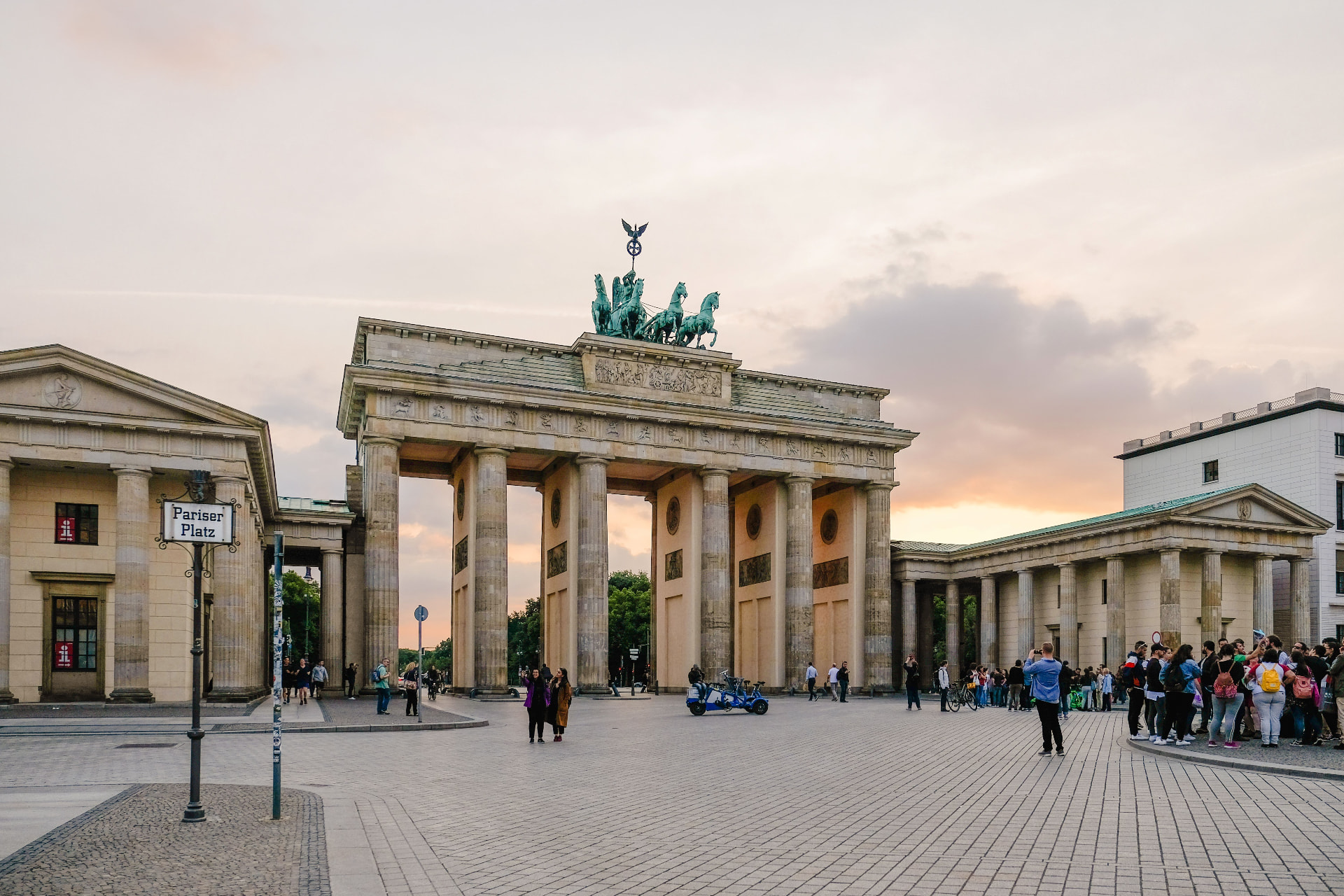
- Brandenburg Gate. The one image everyone knows, and the point where East met West. Free, always open, busiest at midday.
- Reichstag dome. Norman Foster's glass dome over the parliament chamber. Free, but you must register online in advance — often days ahead. The spiral ramp and the mirrored cone are the best interior shoot in the city.
- Memorial to the Murdered Jews of Europe. 2,711 concrete stelae south of the gate, with an underground information centre. Walk into the middle, where the ground drops and the noise cuts out.
- Unter den Linden. The Prussian axis — Humboldt University, the State Opera, Bebelplatz and its sunken empty-bookshelf memorial to the 1933 book burning.
- Museum Island. UNESCO-listed. The Neues Museum (Nefertiti), the Altes Museum, the Alte Nationalgalerie and the Bode. Note that the Pergamonmuseum is closed for long-term renovation — check what is open before you build a day around it.
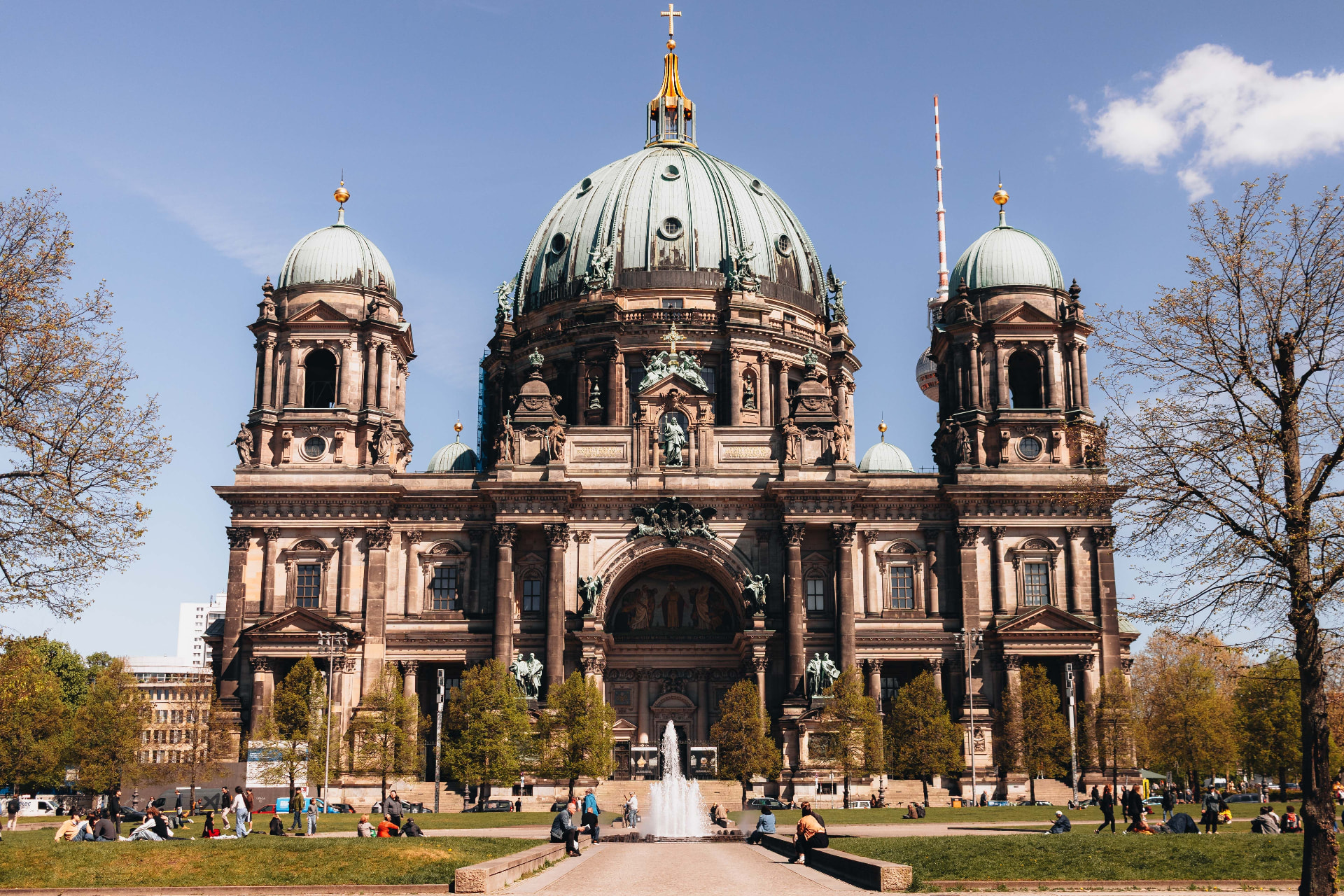
- Berliner Dom. The great domed cathedral facing the Lustgarten; you can climb to the gallery for a view over the island.
- Alexanderplatz and the TV Tower. Socialist-era plaza, the World Clock, and the 368 m Fernsehturm — the highest viewpoint in Germany, worth booking a timed slot for.
The Wall and the divided city
- Berlin Wall Memorial, Bernauer Straße. The single most useful Wall site: a preserved section with the death strip, watchtower and documentation centre. Go here rather than Checkpoint Charlie if you only pick one.
- East Side Gallery. A 1.3 km stretch of Wall along the Spree, painted by artists in 1990. Best early — it's a busy walkway by afternoon.
- Topography of Terror. Free, on the site of the Gestapo and SS headquarters. Sobering and excellently presented.
- Checkpoint Charlie. Historically important, but the site itself is now a souvenir crossroads with actors in uniform. Look, read the outdoor panels, move on.
- Potsdamer Platz. Dead ground until 1989, now glass towers — the clearest illustration of what reunification built.
Parks, palaces and the outer city
- Tiergarten and the Victory Column. 210 hectares of park with a climbable column in the middle of it.
- Charlottenburg Palace. Berlin's largest surviving royal palace, with baroque gardens — the half-day that most visitors skip.
- Tempelhofer Feld. A decommissioned airport turned public park. You can walk the runways. Uniquely Berlin.
- Kreuzberg and Neukölln. Turkish markets, canal-side bars, street art, the best cheap eating in the city.
- Prenzlauer Berg. Intact nineteenth-century tenement streets, cafés, the Mauerpark flea market and Sunday karaoke.
- Teufelsberg. A Cold War listening station on a rubble hill in the Grunewald, now covered in graffiti. Paid entry, great views, awkward to reach — worth it if you like ruins.
Day trips from Berlin
- Potsdam and Sanssouci. 40 minutes on the S-Bahn/RE. Frederick the Great's palace and park, plus the Dutch quarter and Cecilienhof. The best single day trip.
- Sachsenhausen Memorial. A former concentration camp at Oranienburg, about an hour out. Free entry; a guided tour makes it far more comprehensible.
- Spreewald. A network of canals south-east of the city where you travel by punt or kayak. Best May-September.
- Wannsee and the lakes. Reachable on a normal transit ticket. A lido, forests, and the villa where the Holocaust was planned — a strange pairing that is very Berlin.
Best time to visit Berlin
May, June and September are the sweet spots: 18-25°C, long daylight, terraces and lake swimming without August prices. My own pick is early September.
July and August are warm and festival-heavy — open-air cinema, Christopher Street Day, street festivals — but the city empties of locals and heat waves in a stone city with limited air conditioning are no fun.
October brings colour in Tiergarten and the Festival of Lights. November to February is grey, wet and dark by 16:00 — and also the cheapest, quietest and most atmospheric time to do museums. Christmas markets run from late November to Christmas; the Berlinale film festival is in February.
March and April are unpredictable — pack for both — but the city wakes up fast the first warm weekend.
How to plan your trip
Three full days covers central Berlin properly. Two is a rush; four lets you add Potsdam or Sachsenhausen without cutting anything.
A 3-day Berlin itinerary
- Day 1 — Mitte and the government quarter. Reichstag dome (booked slot), Brandenburg Gate, Holocaust Memorial, Unter den Linden, Bebelplatz, Museum Island, Berliner Dom, sunset on the Spree by the Friedrichsbrücke.
- Day 2 — the divided city. Bernauer Straße Wall Memorial in the morning, Topography of Terror and Potsdamer Platz after lunch, East Side Gallery in the late afternoon, dinner and drinks in Kreuzberg.
- Day 3 — neighbourhoods and views. Prenzlauer Berg and Mauerpark, Alexanderplatz and the TV Tower, then Tempelhofer Feld or Charlottenburg depending on the weather.
- Day 4 (optional). Potsdam, or Sachsenhausen with a guide.
What to pre-book
The Reichstag dome (free, but registration fills up), the TV Tower if you want a window table, Museum Island timed tickets in summer, and a guided Sachsenhausen tour. Everything else you can decide on the day.
Where to base yourself
- Mitte — everything on foot, priciest, quiet at night.
- Kreuzberg / Neukölln — food and nightlife, noisier, best value.
- Prenzlauer Berg — calm, residential, good for families.
- Charlottenburg — traditional West Berlin, well connected, older crowd.
Rough daily budget
Mid-range: €60-110 for a room, €30-45 for food, €10 for a day transit ticket, €15-20 per museum. A comfortable day sits around €120-170 per person; hostel-and-döner Berlin runs well under half that.
Getting there and getting around
Berlin Brandenburg (BER) is the single airport. The FEX express train and the RE/RB regional trains reach Berlin Hauptbahnhof in about 30 minutes; the S9 and S45 are slower but more frequent. The airport is in fare zone C, so buy an ABC ticket.
By rail, Berlin is one of the best-connected cities in Europe: roughly 1h45 from Hamburg, 4h from Munich, 4h30 from Prague, and direct Berlin-Warszawa-Express trains from Warsaw via Poznań and Frankfurt (Oder) in about 5h30. Long-distance buses are cheaper again.
In town, the U-Bahn, S-Bahn, trams and buses share one ticket system. Zones AB cover almost everything a visitor needs; ABC adds the airport and Potsdam. A day ticket beats singles as soon as you make three journeys, and the BVG or DB app is the easiest way to buy. Validate paper tickets before boarding — inspectors are plain-clothed and unforgiving. If you're travelling around Germany, the monthly Deutschlandticket can be cheaper than a week of day passes.
Bikes are excellent here — flat, with real lanes. A car is a liability: parking is scarce, and the whole inner city is a low-emission zone.
Photography notes
Berlin rewards blue hour more than golden hour. The city is low-rise and grey by day, then the sodium and LED light hits the Spree and everything separates.
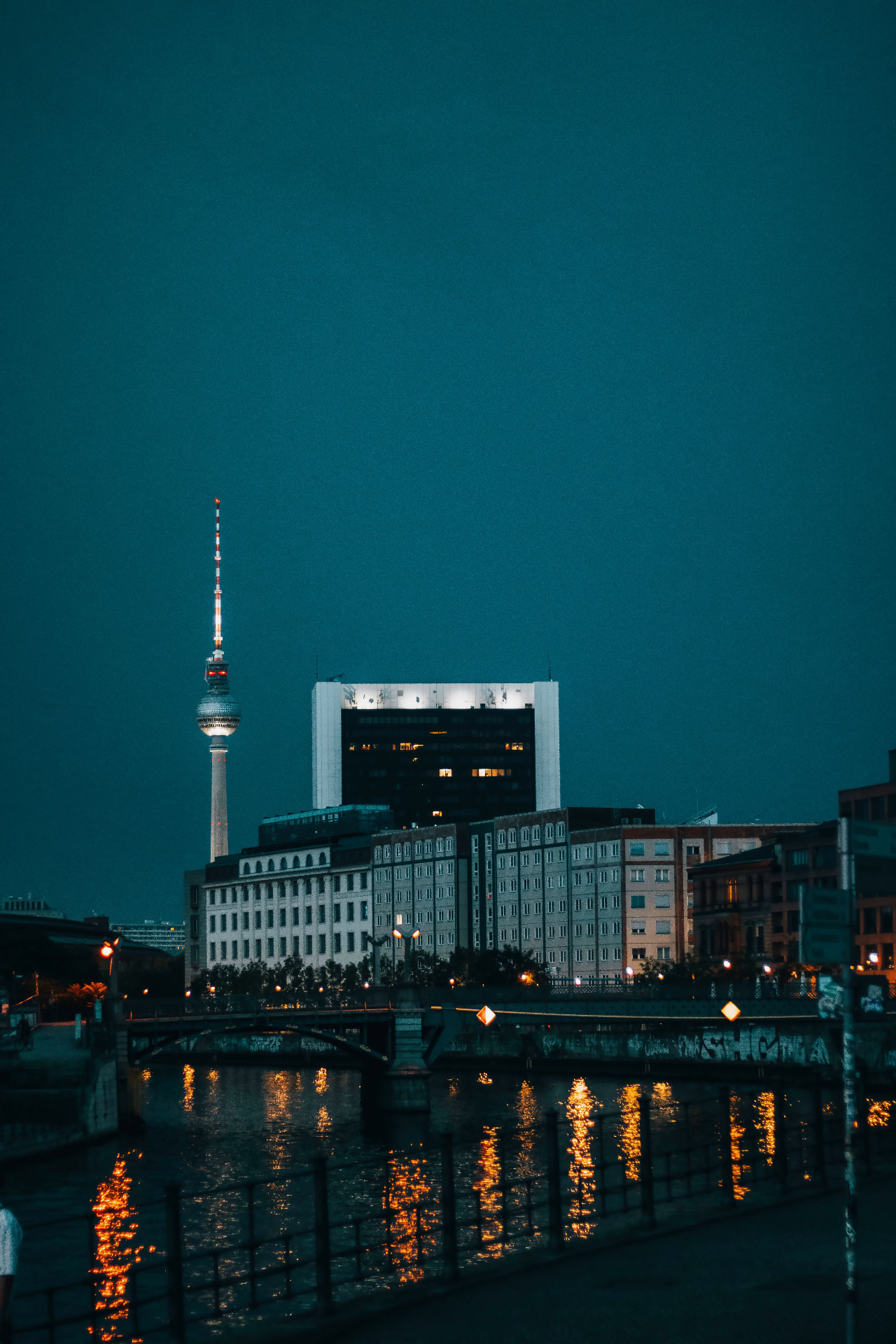
- Museum Island from the Friedrichsbrücke or the Bode's north tip — symmetry and water.
- Brandenburg Gate before 08:00 for an empty Pariser Platz.
- Reichstag dome — the mirrored cone is the best geometric interior in the city; tripods are not allowed.
- East Side Gallery in the morning, when the wall faces soft light and the walkway is still quiet.
- Oberbaumbrücke at dusk, with the U1 crossing the upper deck.
- Drones: effectively off the table over central Berlin — government-district no-fly zones, dense crowds and airport CTR all apply. Read my EASA Open Category guide before you even pack it.
- Clubs: no photography inside, and phone cameras are often taped at the door. Respect it.
Eating and drinking
The clichés are real and cheap: currywurst at a standing Imbiss and the döner kebab, which was popularised in this city by Turkish migrants in the 1970s. Beyond that, Berlin's best everyday food is immigrant food — Turkish grills in Kreuzberg, Vietnamese in Prenzlauer Berg and Mitte, Middle Eastern along Sonnenallee.
Weekend breakfast is close to a civic ritual and runs late — expect long tables and no rush. Beer gardens open at the first warm week; a Späti (corner shop) sells you a beer for a euro or two and it's entirely normal to drink it on the street. Dinner is early by southern European standards, from around 19:00.
Bring cash. Plenty of bars, Imbisse and market stalls still refuse cards. Tipping is modest — round up, or 5-10% handed to the server rather than left on the table.
Practical tips
- Sundays: shops close. Supermarkets at main stations, Spätis and restaurants stay open.
- Cross at the green man. Berliners will tell you off, especially in front of children.
- Memorial conduct: the Holocaust Memorial, Sachsenhausen and the Wall sites are places of mourning. No posing, no climbing.
- Club doors select. Go in a small group, don't be loud, don't queue drunk, and accept a no.
- Safety: Berlin is a safe big city. Watch bags at Alexanderplatz, Warschauer Straße, Kottbusser Tor and on the U8 late at night.
- Language: English is widely spoken. "Bitte", "Danke", "Entschuldigung" and "Zahlen, bitte" still land well.
- Museum passes: the Museum Pass Berlin covers three consecutive days across 30+ museums and usually beats buying separately if you're museum-heavy.
Berlin FAQ
How many days do you need in Berlin?
Three full days for the centre and the Wall sites, four if you want Potsdam or Sachsenhausen. A weekend covers Mitte and one neighbourhood, no more.
Is Berlin worth visiting?
Yes — if you come for history, museums, food and nightlife rather than for one pretty old town. It's the most instructive city in Europe on the twentieth century.
Berlin or Munich?
Berlin for history, art, nightlife and value. Munich for beer halls, baroque comfort and the Alps an hour away. They are not competing for the same trip.
Is the Berlin WelcomeCard worth it?
Only if you'd use the transport anyway and hit several partner attractions. If you're mostly doing museums, the Museum Pass Berlin plus a normal day ticket is usually cheaper.
What's the best month to visit Berlin?
September, then May and June. December if you want Christmas markets and don't mind dark afternoons.
Is Berlin walkable?
Mitte is very walkable, but the city is nine times the area of Paris — you will use the U-Bahn and S-Bahn between districts. Walk within neighbourhoods, ride between them.
Is Berlin expensive?
It's the cheapest major western European capital for food, transport and going out. Accommodation has risen sharply, so book that first and early.
The bottom line
Berlin gives you the whole twentieth century within one transit ticket, five world-class museums on a single island, and a food and nightlife culture that owes nothing to tourism. Give it three days, book the Reichstag dome the moment you have dates, and spend at least one evening on the Spree at blue hour.
More city guides: Kraków, Wrocław, Gdańsk & Sopot, and Eibsee if you want Bavarian mountains after the city.
Planning a shoot in Berlin, or need licensed images of the city? Get in touch.