Kraków Travel Guide: Best Things to Do & How to Plan
Kraków, Poland travel guide — the best things to do: the Rynek, Wawel, Kazimierz, Auschwitz & Wieliczka day trips, when to visit, and a practical 3-day plan.
Kraków was the capital of Poland for more than five hundred years, and it is the only major Polish city whose old town came through the Second World War largely intact. That single fact is why it feels different from Warsaw, Wrocław or Gdańsk: nothing here was rebuilt from photographs. The Gothic brick, the arcades, the crooked cellar bars and the royal hill above the Vistula are the originals.
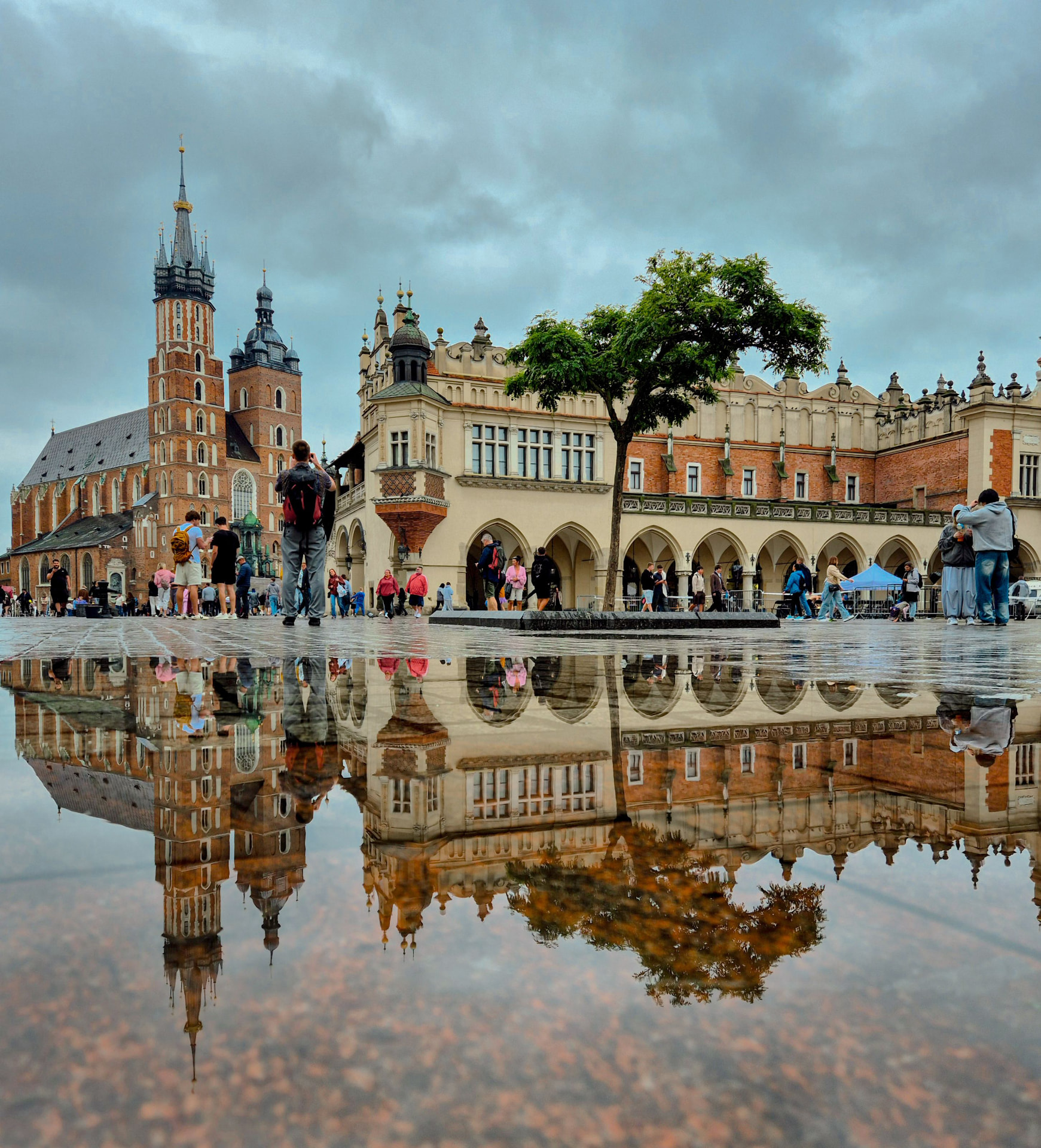
I've shot Kraków in flat winter drizzle and in warm September light, and the rain version is honestly the better one — wet cobbles turn the whole Main Market Square into a mirror. This is a working guide: a short history you can walk, everything worth visiting, the day trips, when to come, and how to plan a trip that doesn't waste half a day queueing.
Why Kraków is worth visiting
- One of Europe's largest medieval squares. Rynek Główny covers about 3.8 hectares and still functions as the city's living room, not a museum set.
- An original old town. UNESCO-listed since 1978, and unusually compact — you can cross it on foot in fifteen minutes.
- Kazimierz. The former Jewish quarter is simultaneously the most moving and the most fun district in the city: synagogues, memorials, flea markets, and the best bars in Poland.
- It is still good value. A proper sit-down dinner with a drink runs well below western European prices, especially away from the square.
- The best day-trip base in the country. Auschwitz-Birkenau, Wieliczka salt mine, Ojców National Park and the Tatra mountains are all reachable and back in a day.
A short history of Kraków you can see on foot
Wawel and the Piast kings
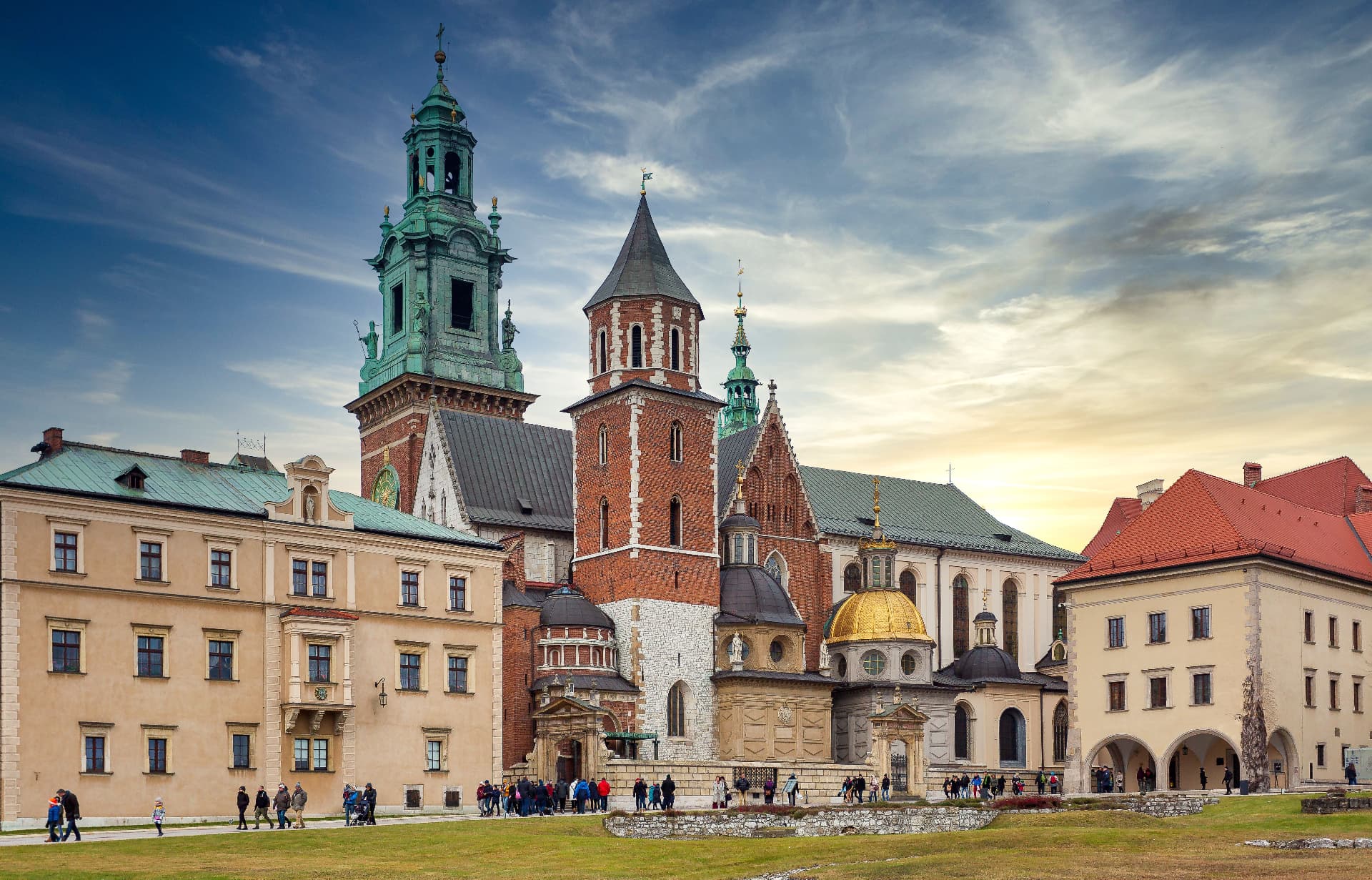
Kraków began on the limestone hill above the Vistula. Wawel was a fortified seat by the 11th century, and the cathedral beside it became the coronation and burial church of Polish monarchs — which it remained even after the court left. Stand on the hill and you're standing in the oldest continuously important place in Poland.
The 1257 charter and the grid you walk today
After the Mongol raids, the city was re-founded in 1257 under Magdeburg law with a deliberate chessboard layout around one enormous market square. That plan is exactly what you navigate today: the Rynek in the middle, straight streets running off it, the whole thing ringed by the Planty park where the walls once stood.
The university, then the loss of the capital
The Jagiellonian University was founded in 1364 — the second-oldest in Central Europe, and Copernicus studied here. The golden age ended administratively in 1596, when the court moved to Warsaw. Kraków kept the crown jewels, the coronations and the prestige; Warsaw got the politics.
Galicia, war and memory
The partitions put Kraków in Austrian Galicia, which is why parts of the city read more like Vienna than Warsaw. In 1939 the Nazis made it the seat of the General Government, sparing much of the architecture while destroying the community: the Jewish population of Kazimierz was forced into the ghetto in Podgórze across the river, and from there to the camps. Understanding that geography — Kazimierz on one bank, Podgórze on the other — is the key to a lot of what you'll see.
What to visit in Kraków
Rynek Główny and the Old Town
- Cloth Hall (Sukiennice). The Renaissance trading hall in the middle of the square. Souvenir stalls below, a good 19th-century Polish painting gallery upstairs.
- Rynek Underground. An excellent museum built into the excavated medieval market level, four metres below your feet. Book ahead; it sells out.
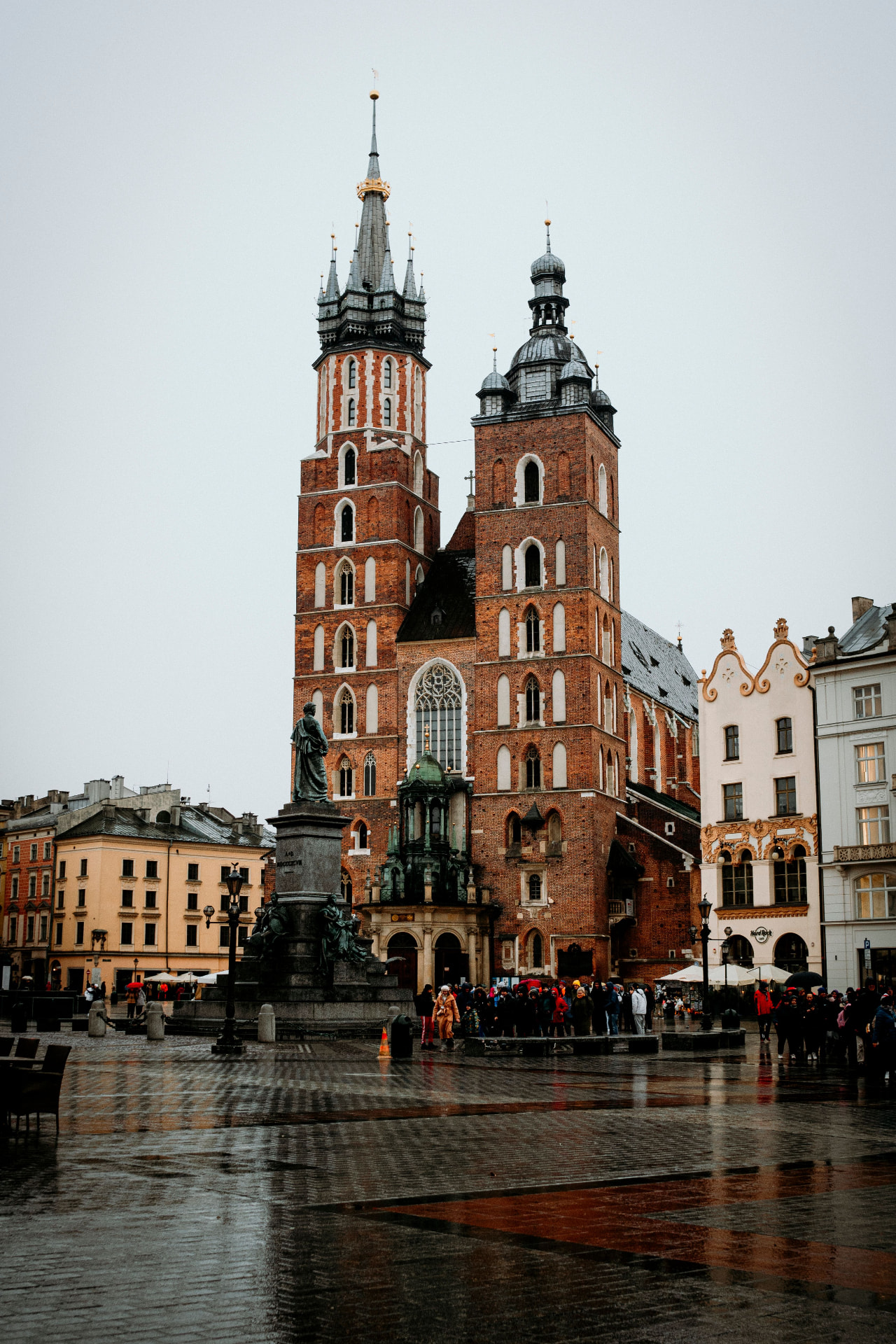
- St Mary's Basilica. Go inside for the Veit Stoss altarpiece — twelve metres of carved limewood, arguably the finest late-Gothic altar in Europe. The tower climb is separate and limited.
- Town Hall Tower. All that's left of the demolished town hall; climbable for a square-level view.
- Collegium Maius. The university's oldest building, with an arcaded courtyard and guided tours of the historic rooms.
- Florian Gate and the Barbican. The surviving stretch of the city walls at the top of Floriańska street.
- Planty. The green ring where the moat was. The fastest way to cross the centre without traffic.
Wawel Royal Castle and Cathedral
Wawel is ticketed by section rather than as one attraction, and that trips people up. The courtyard and grounds are free to walk. Pay separately for the State Rooms, the Royal Private Apartments, the Crown Treasury and Armoury, and for the cathedral, whose ticket includes the Sigismund Bell climb and the royal crypts. Pick two, not five. Then walk down to the dragon's den and the fire-breathing Wawel Dragon statue on the river bank — the children's favourite part of Kraków.
Kazimierz
Fifteen minutes' walk south of the Rynek. Start on Szeroka street, which is really a square, and take in the Old Synagogue, the Remuh Synagogue and its 16th-century cemetery, and the Galicia Jewish Museum. Then let it get informal: Plac Nowy for a zapiekanka from the round market hall, the Sunday flea market, the Józefa street murals, and after dark a bar crawl that needs no plan at all.
Podgórze and the war sites
- Ghetto Heroes Square. Seventy empty chairs standing for the people deported from here. Quiet, and devastating.
- Schindler's Factory (Fabryka Emalia Oskara Schindlera). The best museum in the city on wartime occupied Kraków. Allow two hours.
- Eagle Pharmacy and the surviving fragment of the ghetto wall on Lwowska street.
If you have more time
- Kościuszko Mound — an artificial hill west of the centre with a full panorama of the city and the Tatras on clear days.
- Nowa Huta — the socialist-realist steelworkers' district; a guided tour turns it from grey blocks into one of the most interesting hours you will spend here.
- Kraków Zoo and Wolski Forest — good with kids, and a real forest twenty minutes from the square.
- MOCAK and the Cricoteka — contemporary art and Tadeusz Kantor's theatre archive, both in Podgórze.
Day trips from Kraków
- Auschwitz-Birkenau (about 1h20 by road, near Oświęcim). Entry is free but timed, and slots go weeks ahead in summer — book on the official museum site as soon as your dates are fixed. Take a guided tour; it makes the site legible. Allow at least 3.5 hours on site plus travel, dress for weather, and treat it as what it is: a cemetery, not a photo stop.
- Wieliczka Salt Mine (30 minutes by train or bus). Guided routes only, 800 years of tunnels, chapels carved from rock salt. Cool underground all year — bring a layer. Half a day.
- Zakopane and the Tatras (2–2.5 hours). Doable as a long day, far better as an overnight if you want an actual mountain hike.
- Ojców National Park (about 40 minutes). Limestone gorges, caves and the storybook Pieskowa Skała castle. The easy nature option.
- Częstochowa (about 2 hours). The Jasna Góra monastery and the Black Madonna — Poland's most important pilgrimage site.
Best time to visit Kraków
- May–June. The sweet spot. Long days, green Planty, everything open, crowds not yet at peak.
- July–August. Warmest and busiest, with the Jewish Culture Festival and Wianki on the Vistula. Book accommodation and Auschwitz slots early.
- September. My favourite. Warm afternoons, softer light, fewer people, cheaper rooms.
- October–November. Autumn colour in the parks, moody light, low prices. Bring a rain shell.
- December. The Christmas market fills the Rynek from late November; mulled wine, oscypek cheese, and the square lit up. Cold and lovely.
- January–February. Cheapest, emptiest, most atmospheric. Caveat: Kraków sits in a valley and winter air quality can be poor on still, cold days — worth checking if you're sensitive.
How to plan your trip
How long: two days for the Old Town, Wawel and Kazimierz. Three to add Podgórze and Schindler's Factory properly. Four if you want Auschwitz or Wieliczka without rushing anything else. Five is not too many.
Book ahead: Auschwitz-Birkenau (weeks in summer), Wieliczka, Rynek Underground, Wawel State Rooms, and Schindler's Factory. Everything else you can decide on the morning.
Where to stay: the Old Town for walkability, Kazimierz for atmosphere and food, Podgórze for quiet and value. All three are within walking distance of each other.
Rough daily budget: a mid-range hotel plus two restaurant meals, transport and one or two museums is comfortable and still well under what the same day costs in Prague or Vienna.
A 3-day Kraków itinerary
Day 1 — the Old Town. Rynek Główny early, before the crowds. St Mary's Basilica for the altarpiece, then Rynek Underground. Lunch off Floriańska. Collegium Maius in the afternoon, Barbican and Florian Gate, then a loop of the Planty. Dinner in the centre and a cellar bar afterwards.
Day 2 — Wawel and Kazimierz. Wawel at opening: cathedral plus one paid section, then the dragon's den down to the river. Walk the Vistula boulevards to Kazimierz. Szeroka, the Remuh cemetery, the Galicia Jewish Museum. Zapiekanka at Plac Nowy, then stay for the evening — this is the right district for it.
Day 3 — Podgórze and the war story. Cross the Father Bernatek footbridge. Ghetto Heroes Square, the ghetto wall fragment, then Schindler's Factory for two hours. Afternoon free: Kościuszko Mound for the view, or MOCAK if the weather turns. Evening back on the Rynek at blue hour.
Optional day 4 — a day trip. Auschwitz-Birkenau (full day, book ahead) or Wieliczka (half day, easy by train).
Getting there and getting around
- Flying. Kraków Airport (KRK) in Balice is 11 km out, with a direct train to Kraków Główny in about 20 minutes.
- By train. Kraków Główny is right beside the Old Town. Fast trains from Warsaw take roughly 2.5 hours, Wrocław about 3.5, Katowice under 1.5, Gdańsk 5–6.
- From abroad by bus. Direct long-distance coaches from Berlin, Prague, Vienna and Budapest; slower than flying, cheaper than everything.
- In the city. Trams and buses are frequent and cheap; buy tickets in the app or from onboard machines and validate them. Most of the Old Town is pedestrianised.
- Don't rent a car unless you're heading to the mountains. Parking in the centre is expensive, restricted, and pointless when everything is within a 25-minute walk.
Photography notes
- Shoot the square after rain. The cover photo above is a puddle on the Rynek. Get the lens close to the water, keep the horizon high, and let the reflection carry the frame.
- Blue hour on the Rynek is the strongest window — the Cloth Hall arcades and St Mary's are lit while there's still colour in the sky.
- Flat winter light suits St Mary's. Grey sky separates the brick cleanly and the uneven towers read better without harsh shadow.
- Wawel from the Vistula boulevards in late afternoon, or from the Bernatek footbridge for the castle-plus-river composition.
- Kazimierz rewards side streets more than landmarks. Józefa, Meiselsa and the courtyards off Szeroka.
- Drones: the city centre is effectively off limits — controlled airspace, crowds and heritage restrictions. Fly outside the city, and read up on the rules first in my EASA Open Category guide.
- Memorial sites: at Auschwitz-Birkenau and the Podgórze memorials, put the camera away unless there's a reason not to.
What to eat and drink
- Obwarzanek krakowski — the braided ring bread from blue street carts. A protected regional product, and breakfast for a couple of złoty.
- Pierogi — ruskie (potato and curd cheese) first, then whatever the kitchen does well. Fried, not boiled, if it's an option.
- Żurek — sour rye soup, often served in a bread bowl.
- Zapiekanka — the long open-faced toasted baguette. Plac Nowy in Kazimierz is the institution.
- Milk bars (bar mleczny) — canteen-style, no-frills, absurdly cheap, still genuinely good.
- Oscypek — smoked sheep's cheese from the mountains, grilled with cranberry at the Christmas market.
- Drinks — Polish craft beer is excellent, vodka is taken seriously, and Kraków's cellar bars are the reason nobody in Kazimierz goes home early.
- Paying — cards work almost everywhere, contactless included. Tipping around 10% in restaurants is normal, not required.
Practical tips
- Currency is the złoty (PLN), not the euro. Avoid the Euronet-style street exchange kiosks on tourist streets; use a bank ATM or pay by card.
- Most shops close on Sundays under Poland's trading restrictions. Restaurants, cafés and museums stay open.
- Kraków is a safe city. The usual caveats apply: taxi apps rather than street cabs, and don't accept "free" tours or drinks pitched to you on the square.
- Left luggage is available at Kraków Główny — useful on arrival or departure day.
- Cobbles everywhere. Bring shoes you can walk 15 km in.
- A little Polish goes a long way: dzień dobry (hello), dziękuję (thank you), przepraszam (excuse me).
- At Auschwitz-Birkenau, bags larger than a small daypack are not allowed inside — leave them at the coach or the left-luggage point.
Kraków FAQ
How many days do you need in Kraków?
Three is the honest answer: two for the Old Town, Wawel and Kazimierz, one for Podgórze and Schindler's Factory. Add a fourth if you want Auschwitz or Wieliczka.
Is Kraków worth visiting?
Yes — it's the most complete historic city in Poland, one of the best-value city breaks in Europe, and the base for two of the continent's most significant day trips.
Kraków, Warsaw or Wrocław?
Kraków for history and atmosphere, Warsaw for modern Poland and the rebuilt-capital story, Wrocław for a prettier square with fewer tourists. If you only have one weekend, Kraków.
Can you do Auschwitz and Wieliczka in one day?
Tour operators sell it, and I'd avoid it. Auschwitz deserves an unhurried visit and some quiet afterwards. Split them across two days if you possibly can.
What's the best month to visit Kraków?
September, then May. Warm enough, light is good, and the summer crowds have thinned. December if you want the Christmas market.
Is Kraków walkable?
Very. The Old Town, Wawel, Kazimierz and Podgórze form a chain you can walk end-to-end in about 40 minutes, with trams for anything further out.
Is Kraków expensive?
Not by western European standards. Accommodation in the Old Town is the biggest line item; food, transport and museums are cheap by comparison — and milk bars keep it cheaper still.
The bottom line
Kraków gives you a genuinely medieval city centre, a royal hill, a Jewish quarter that is both memorial and nightlife district, and the most important historical day trips in Europe — all in a place you can cross on foot. Give it three days, pre-book the two or three things that sell out, and leave the rest to wandering.
More Poland guides: Wrocław, Poznań, Gdańsk & Sopot and Szklarska Poręba in the Karkonosze mountains.
Planning a shoot in Poland, or need licensed images of Kraków? Get in touch.