Poznań Travel Guide: Best Time to Visit & Local Tips
A photographer's Poznań travel guide — Stary Rynek and the Old Town Hall, Ostrów Tumski cathedral, the best months to visit, what to eat and a 2-day plan.
Poznań is the Polish city most travellers skip. They fly into Kraków, do a weekend in Warsaw, maybe add Gdańsk in summer — and drive straight past the place where Poland actually began. I've shot Poznań in January fog and in the long blue evenings of June, and both times I had the best streets in the city almost to myself. That doesn't happen in Kraków anymore.
This is a working guide: why Poznań earns two or three days, the history that makes the old town legible, when to come, what to photograph, what to eat, and the practical details that stop a good trip turning into an expensive one.
Why visit Poznań?
Six reasons, in the order they matter to me.
- It's where Poland started. The cathedral on Ostrów Tumski is the oldest in the country, and the first Polish rulers are buried in it. This isn't a themed old town — it's the actual foundation stone.
- The centre is tiny and walkable. You can cross the historic core in twenty minutes. No metro, no logistics, no wasted hours.
- It's noticeably cheaper than Kraków or Warsaw for hotels, restaurants and coffee — outside trade-fair weeks, which I'll come back to.
- Real city energy. Poznań has over 100,000 students. The bars, bakeries and record shops exist for locals, not for stag parties.
- It photographs beautifully and quietly. Painted Renaissance façades, red-brick Prussian industry, empty cobbles at blue hour, no crowd management required.
- It's an easy stop between Berlin and Warsaw. Direct trains both ways make it the natural halfway break on a Central Europe trip.
A short history of Poznań you can actually see
Poznań's story is easier to hold onto when each era is attached to somewhere you can stand.
The Piast beginnings (10th century)
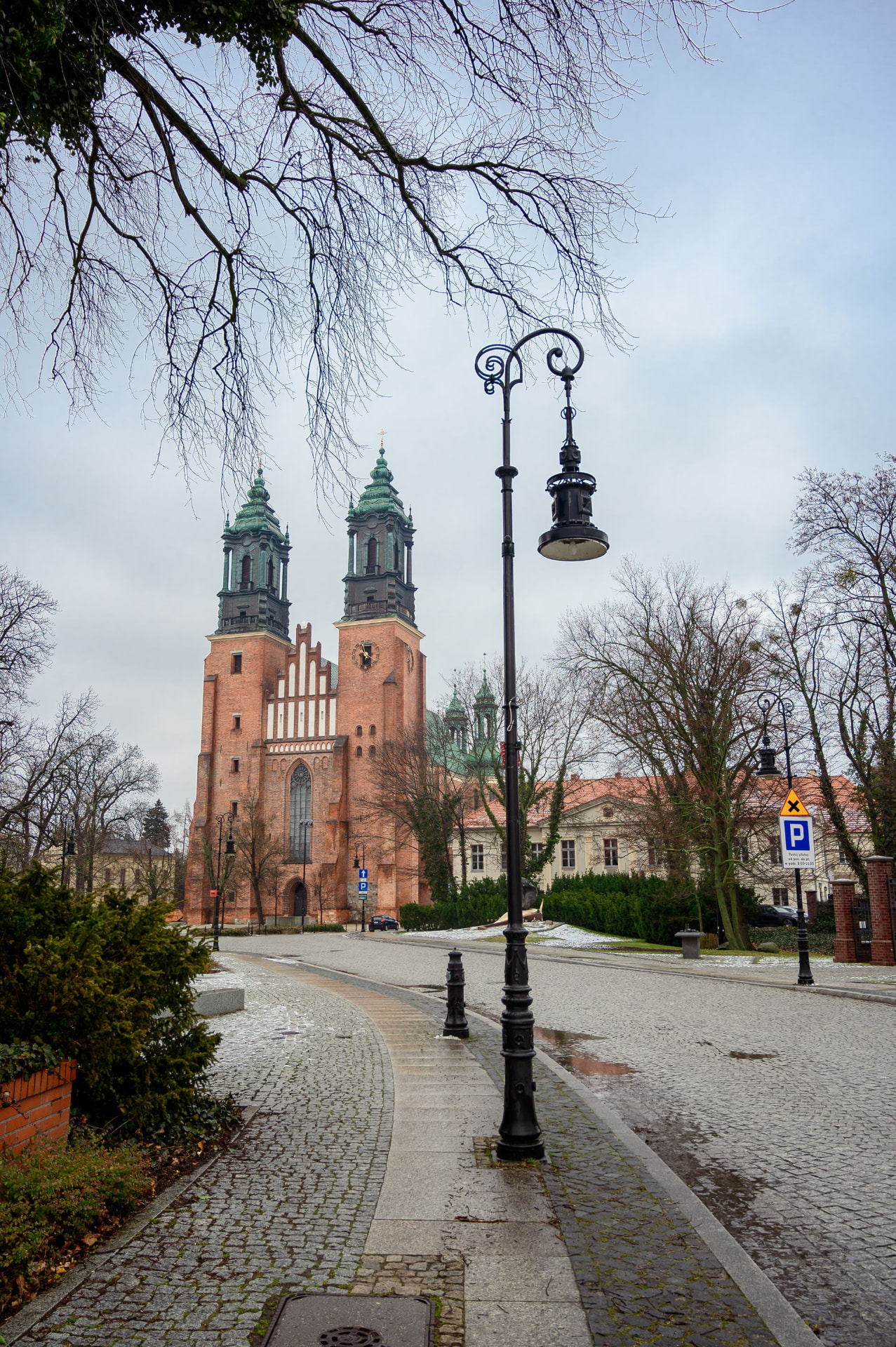
Mieszko I, the first historical ruler of Poland, built a stronghold on the island now called Ostrów Tumski and accepted Christianity in 966. The cathedral raised there became the country's first. Stand in front of its two towers and you're at the origin point of the Polish state — the Golden Chapel inside holds the tombs of Mieszko I and Bolesław the Brave.
The merchant city and the Renaissance (14th-16th century)
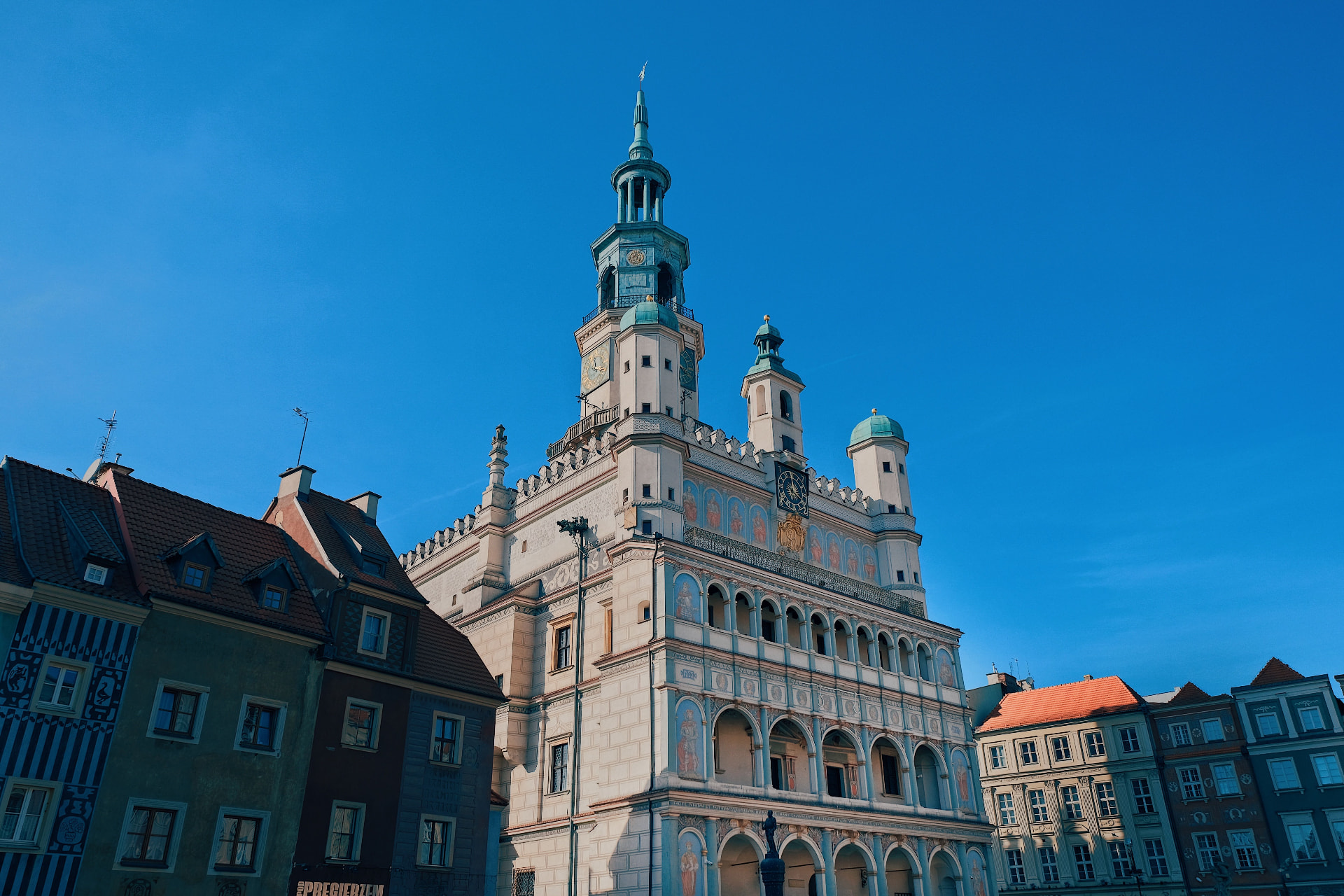
The city moved west across the river to a planned market square, Stary Rynek, and grew rich on trade between Germany and the east. In the 1550s an Italian architect, Giovanni Battista di Quadro, rebuilt the town hall with the loggia and painted frieze you see today. That building is the single best argument that Poznań was once one of Europe's wealthier trading towns.
Prussian Poznań (1793-1918)
After the partitions of Poland, Poznań spent 125 years as Prussian "Posen". That century is written across the city in red brick and heavy stone: the fortress rings, the industrial buildings, the railway, and the enormous Imperial Castle built for Kaiser Wilhelm II. Poles took the city back themselves in the Greater Poland Uprising of 1918-19.
War, reconstruction and 1956
The 1945 Battle of Poznań destroyed much of the centre; the Stary Rynek you walk across is a careful post-war reconstruction. In June 1956, Poznań factory workers staged the first mass anti-communist revolt in Poland — it was crushed with tanks. The two stark crosses of the Poznań June memorial by the Imperial Castle commemorate it, and they're worth ten quiet minutes.
Best time to visit Poznań
Poznań has a continental climate: proper cold winters, warm summers, and shoulder seasons that swing. Here's how the year actually feels.
May, June and September — the sweet spots
This is when I'd tell anyone to come. Long daylight (sunset past 9pm in June), 14-25°C, café terraces open across Stary Rynek, and prices still reasonable. September adds warm light and quieter streets once the students are back at lectures.
July and August — warm, festival-heavy, still not crowded
Expect 25-30°C and a run of open-air concerts and street festivals. Lake Malta and the Rusałka beaches fill up. Poznań never gets the tourist crush of Kraków, so summer here is genuinely comfortable.
November — Saint Martin's Day, the local highlight
On 11 November the city celebrates its own patron saint with a parade down Święty Marcin street and an industrial quantity of rogal świętomarciński, the protected white-poppy-seed croissant. Cold, grey, and one of the most authentically local days in the Polish calendar.
December — Christmas market and ice rink
The Betlejem Poznańskie market takes over Plac Wolności and Stary Rynek with mulled wine, an ice rink and an ice-sculpture festival. Dark by 4pm, often below freezing, and very pretty for it. Book accommodation early for the weekends.
January and February — cheap, empty, atmospheric
Anywhere from -8 to +4°C, frequently grey. It's also the best value of the year and, for photography, the moody flat light on brick and cobble is a feature rather than a problem. Pack layers and plan indoor anchors.
The one thing to check before you book
Poznań is Poland's biggest trade-fair city. During major Międzynarodowe Targi Poznańskie events, hotel rates can double or triple and availability disappears. Check the fair calendar for your dates before you book anything — this catches out more visitors than any other Poznań quirk.
Getting to Poznań and getting around
Arriving
- By air: Poznań-Ławica (POZ) sits 7km from the centre, with short-haul links across Europe. Bus 159 or L into town takes about 25 minutes; a taxi is cheap.
- By train: Poznań Główny is a major hub. Roughly 2h40 from Warsaw on an express, ~3h from Berlin, ~2h30 from Wrocław, ~4h from Gdańsk. Book PKP Intercity a few days out for the cheaper fares.
- By car: the A2 motorway runs straight from the German border through Poznań to Warsaw — about 3h from Frankfurt (Oder), 3h30 from Berlin. Convenient for a road trip, unnecessary for the city itself.
Moving around
Trams and buses are frequent, cheap and cover everything the walk doesn't. Buy tickets from machines at stops, from the driver's machine, or through a mobile app, and validate on board. The historic centre, Ostrów Tumski, Śródka and the Imperial Castle are all comfortably walkable from each other. Skip the car — the centre is a maze of one-ways and paid zones.
What to visit in Poznań
Stary Rynek and the Old Town Hall goats
The market square is the obvious start: pastel merchant houses, the Renaissance town hall, and the little row of colourful arcaded fishmongers' houses. At noon every day, two mechanical billy goats butt heads above the town hall clock while a bugler plays — Poznań's signature five minutes. Get there ten minutes early for a clear view.
Croissant Museum (Rogalowe Muzeum)
On the square itself, and better than it sounds: a bilingual, deliberately funny live show where you help make a Saint Martin's croissant while learning Poznań-dialect words. The most fun hour in the city with kids, and honestly without them too.
Ostrów Tumski and Porta Posnania
Cross the river to the cathedral island. See the cathedral and the Golden Chapel, then do Porta Posnania, the interactive heritage centre across the water — it's the clearest explanation of early Polish history you'll find anywhere, delivered through an audio guide that actually works.
Imperial Castle and the Enigma Cipher Centre
The Kaiser's castle (Zamek) is now a culture centre you can wander. Next door, the Enigma Cipher Centre tells the story of the three Poznań mathematicians who first broke the Enigma code in 1932 — years before Bletchley Park. It's excellent, modern, and a genuine point of local pride.
Śródka and the mural
A small, slowly gentrifying district just past Ostrów Tumski, with the much-photographed 3D Śródka mural of a vanished tenement and a cluster of good cafés. Fifteen minutes' walk and worth it.
Stary Browar
A 19th-century brewery converted into an award-winning shopping and art complex — red brick, courtyards, sculpture, and a park behind it. Even if you don't shop, the architecture is the reason to walk through.
Lake Malta, Termy Maltańskie and New Zoo
A regatta lake ten minutes from the centre with a promenade, a year-round ski slope, the big Termy Maltańskie thermal-pool complex, and the New Zoo behind it. This is where locals spend Sundays.
Palm House and Citadel Park
The Palmiarnia in Wilson Park is one of Europe's largest palm houses — the best possible move on a cold, wet afternoon. The Citadel Park, built over the old Prussian fort, is the city's biggest green space and holds sobering war cemeteries.
Jeżyce and Łazarz
Two pre-war residential districts where the city's food and coffee scene actually lives. Jeżyce especially: bakeries, wine bars, small restaurants, and the Rynek Jeżycki market hall. Spend one evening here instead of on Stary Rynek.
Day trips: Kórnik and Rogalin
Two aristocratic estates within 30-40 minutes by bus or car — Kórnik Castle, a neo-Gothic fantasy on a lake with an arboretum, and Rogalin Palace with its ancient oaks. Together they make a very good third day.
Photography notes
- Stary Rynek: shoot the town hall in late-afternoon light when the sun rakes across the painted frieze, or early morning when the square is empty apart from delivery vans. Midday flattens the façades badly.
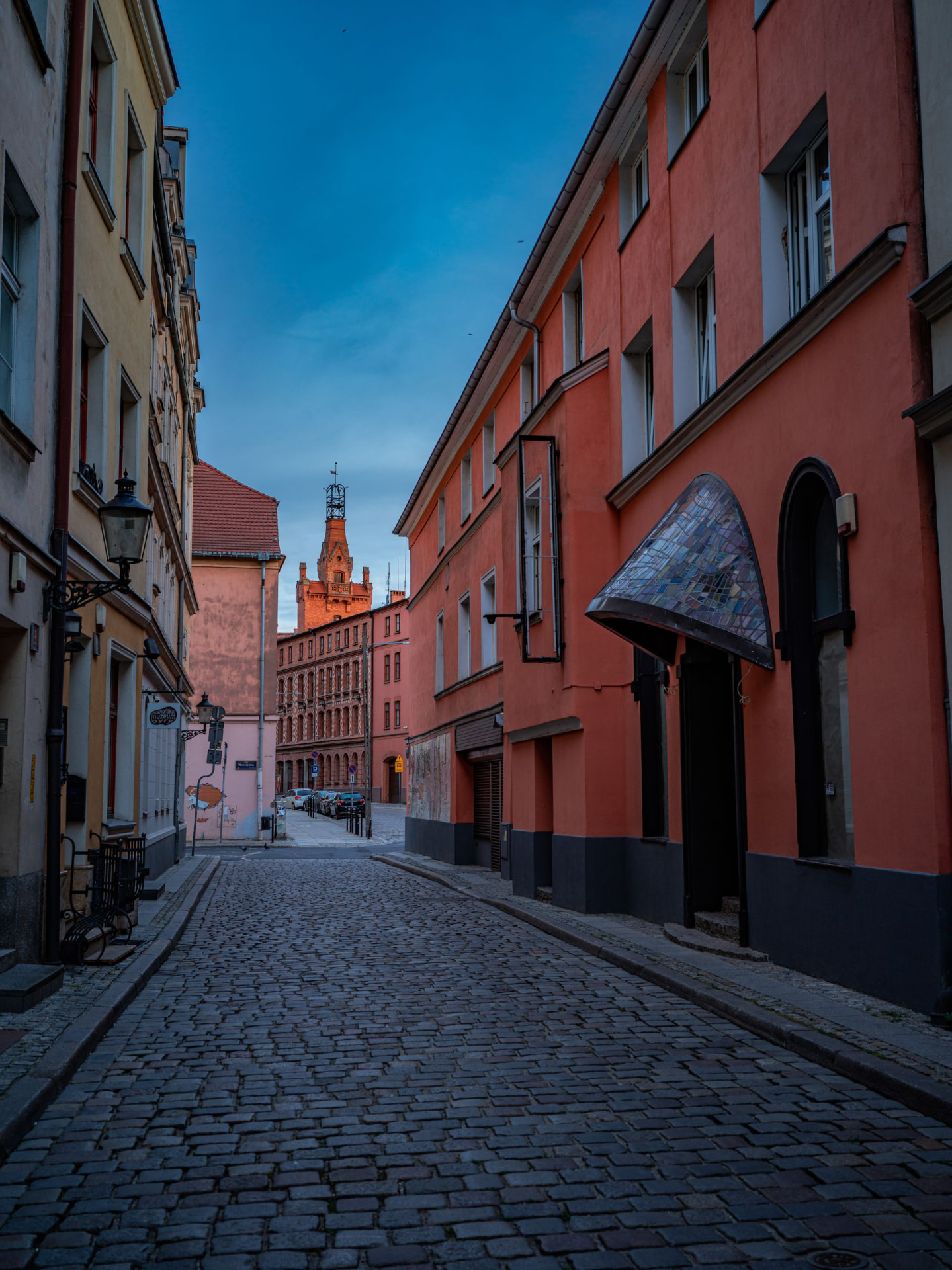
- Side streets at blue hour: the 20 minutes after sunset are the best window in the city — wet cobbles, warm street lamps, deep blue sky, and nobody in frame. Bring something that handles a slow shutter.
- The cathedral: flat overcast winter light suits it. Brick and copper hold colour when the sky is a grey card, and the bare trees on Ostrów Tumski give you a frame.
- Śródka mural: shoot it straight on from across the little square — the 3D illusion collapses at an angle.
- Rooftop views: the observation deck at the top of the Okrąglak area and the castle surroundings give you the skyline; the Palm House gives you interiors when weather kills everything else.
- Drones: central Poznań sits under controlled airspace and city-centre restrictions — you cannot just launch over Stary Rynek. Check the Polish airspace app before you fly and read my EASA Open Category guide for how the rules work across the EU.
Eating and drinking like a local
- Rogal świętomarciński — the EU-protected Saint Martin's croissant, filled with white poppy seed, nuts and raisins. Sold year-round in good bakeries, at its peak in November. One is a meal.
- Pyry z gzikiem — boiled potatoes with soured curd cheese, cream and chives. Cheap, filling, and pure Greater Poland.
- Milk bars (bar mleczny) — subsidised canteens serving pierogi, soups and cutlets for a few euros. Point at what you want; nobody minds.
- Craft beer — Poznań has a strong independent brewing scene, and multitaps are easy to find around the old town and Jeżyce.
- Coffee — Jeżyce is the specialty-coffee district. Standards are high and prices are a fraction of Western Europe.
- Practicalities — cards and phone payments work almost everywhere, tipping around 10% in restaurants is normal, and tap water is safe to drink.
A 2-day Poznań plan
Day 1 — the old city
Coffee in Jeżyce, then walk to Stary Rynek for 11:45 to catch the goats at noon. Croissant Museum show after, lunch in a milk bar or on the square's edge, then the Imperial Castle and the Poznań June memorial in the afternoon. Late-afternoon walk through Stary Browar, dinner in Jeżyce, and back to the old town's side streets for blue hour.
Day 2 — origins and water
Morning on Ostrów Tumski: cathedral, Golden Chapel, then Porta Posnania. Cross to Śródka for the mural and lunch. Afternoon at Lake Malta — promenade walk, or Termy Maltańskie if the weather turns. Evening: Enigma Cipher Centre if you skipped it, or a multitap and an early night.
Day 3 add-on
Kórnik Castle in the morning, Rogalin Palace and its oaks in the afternoon, back in the city for dinner. If it's raining, swap in the Palm House and the Citadel Park museums instead.
Practical tips for visiting Poznań
- Check the trade-fair calendar before booking a hotel. It's the single biggest cost variable in this city.
- Most shops close on Sundays under Polish trading law. Restaurants, cafés, museums and Stary Browar's food floor stay open; supermarkets largely don't. Stock up on Saturday.
- Bring cash for very little. Contactless is standard; a small amount of złoty covers market stalls and the odd milk bar.
- English is widely spoken by anyone under 40 and in all tourist venues. Dzień dobry (hello), dziękuję (thank you) and proszę (please) will still earn you goodwill.
- Wear real shoes. The old town and Ostrów Tumski are cobbled, uneven, and slick when wet.
- Poznań is safe. Ordinary city awareness around the station at night is all you need.
- Luggage storage is available at Poznań Główny, which makes the city an easy stopover between trains.
- Winter days are short — dark by 4pm in December. Front-load your outdoor shooting and use museums for the afternoon.
Poznań FAQ
How many days do you need in Poznań?
Two full days covers the old town, Ostrów Tumski, the castle and Lake Malta comfortably. A third lets you add Kórnik and Rogalin or slow down in Jeżyce.
Is Poznań worth visiting?
Yes — particularly if you've already done Kraków and Warsaw, or if crowds put you off. You get Poland's founding history, a genuinely handsome Renaissance square and a real local food scene, at lower prices and without queues.
Poznań or Kraków?
Kraków is grander and has Wawel and Auschwitz nearby, but it's crowded and priced for tourists. Poznań is smaller, cheaper, more everyday, and easier to enjoy. If you have one week in Poland, do both — they're four hours apart by train.
What is the best month to visit Poznań?
June for long evenings and terraces, September for warm light and fewer people, November if you want Saint Martin's Day, December for the Christmas market.
Is Poznań walkable?
Very. The historic core is about 1.5km across and Ostrów Tumski, Śródka, Stary Browar and the Imperial Castle are all within a 25-minute walk of Stary Rynek.
Do people speak English in Poznań?
Widely, yes — it's a big student city with an international business calendar. Museums, restaurants and hotels are all comfortable in English.
Can you visit Poznań as a day trip from Berlin?
You can — about 3 hours each way by direct train — but you'd be rushing. One night turns it into a proper trip and lets you catch blue hour on the square.
Bottom line
Poznań rewards visitors who like their history real and their cities unmanaged. Come in June or September, check the trade-fair calendar, base yourself near Stary Rynek but eat in Jeżyce, stand under the town hall at noon, and give Ostrów Tumski a slow morning. If you're building a wider Poland trip, my Gdańsk and Sopot guide covers the Baltic coast, and Samsara in Międzygórze is the off-grid mountain side of the country.
Planning a destination feature, hotel shoot or tourism campaign in Poland? Get in touch — I work on commission across Europe.