Rome Travel Guide: History, Best Time to Visit & Local Tips
A photographer's guide to Rome — the history you can actually stand in, the Colosseum, Roman Forum and Vatican, the best months to visit, and how to eat and move like a local.
Rome is not a city you tick off. It's a city where twenty-seven centuries are stacked on top of each other in the same street, and where the best thing you can do on your first morning is put the itinerary in your pocket and walk. I've shot Rome in February drizzle and in the flat white heat of August, and the version of the city I keep coming back for is the one that happens early — bar coffee at seven, empty piazzas at eight, the Forum lighting up from the east while the queues are still forming.
This is a working guide: the history that makes the ruins legible, the places that genuinely earn your time, when to come, and the small habits that make you move through Rome like someone who lives there rather than someone being sold to.
A short history of Rome you can actually see
Rome's history sounds intimidating written down and becomes obvious once you can attach each era to a place you can stand in. Five layers cover most of it.
The Republic (509–27 BC)
Rome grows from a cluster of hill settlements into the dominant power of the Mediterranean, governed by the Senate. You see it in the Roman Forum — the temples, basilicas and speaker's platform that were the working centre of the state — and in the Republican temples at Largo di Torre Argentina, the site of Caesar's assassination.
The Empire (27 BC–476 AD)
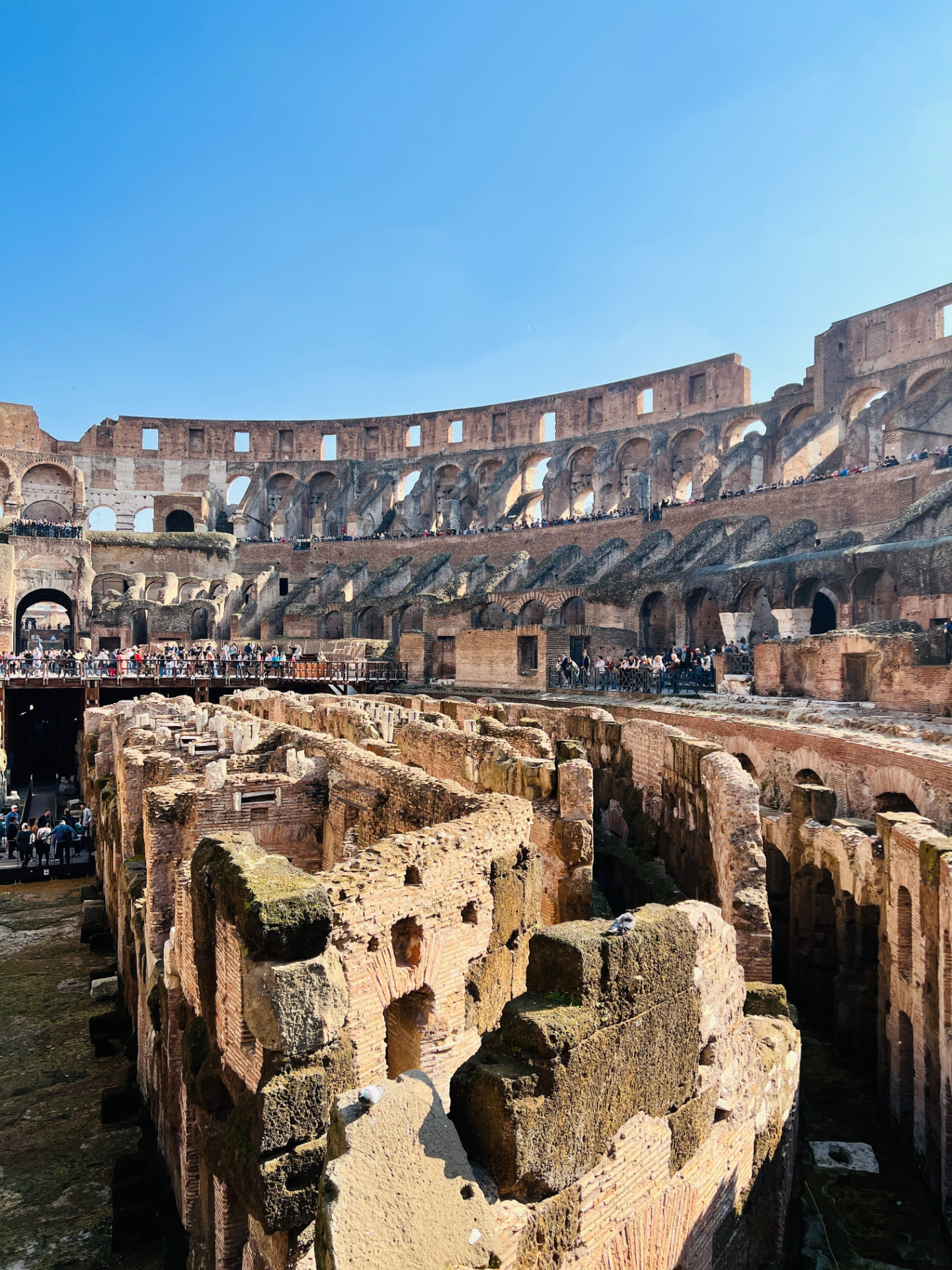
Augustus turns the Republic into an empire and the emperors build at a scale that still defines the skyline. The Colosseum (opened AD 80), the Pantheon with its unreinforced concrete dome, the imperial palaces on the Palatine, the Baths of Caracalla, and the arches of Titus and Constantine are all this layer.
Christian and medieval Rome
After Constantine legalises Christianity in the fourth century, Rome becomes the seat of the papacy and the population collapses from a million to a few tens of thousands. Ancient marble gets recycled into churches. Basilica di San Clemente is the clearest place to feel it: three levels of building, from a twelfth-century church down through a fourth-century basilica to a first-century Roman house.
Renaissance and Baroque
The popes rebuild the city as propaganda in stone. St Peter's Basilica, the Sistine Chapel, Bernini's colonnade and fountains, Borromini's churches, the Spanish Steps and the Trevi Fountain all come from this competitive, theatrical Rome. If a Roman street suddenly opens onto a stage-set square, that's the Baroque working on you deliberately.
Unified Italy and the twentieth century
Rome becomes the capital of a unified Italy in 1871, gets the wedding-cake Vittoriano monument, and then Mussolini drives Via dei Fori Imperiali straight through the imperial forums and builds the EUR district south of the centre. The Vatican becomes an independent state in 1929. It's the least photogenic layer and the one that explains most of the modern street plan.
Best time to visit Rome
Rome has no dead season anymore, but the months are very different experiences.
April, May and early June — the sweet spot
Mild days in the low twenties Celsius, long evenings, wisteria and roses, and everything open. It's also busy and priced accordingly, and Easter week around the Vatican is the single most crowded period of the year. Book accommodation and timed tickets weeks ahead.
Late September and October — my pick
The heat breaks, the light gets lower and warmer, prices ease off the summer peak, and the city feels like it belongs to Romans again. October brings some rain, but it usually arrives as short heavy showers rather than grey days, and wet cobblestones at night are a gift photographically.
July and August — honest version
Hot, often 33–38°C, with very little shade at the Forum, Palatine and Ostia Antica. Crowds peak, and in mid-August many family-run restaurants and shops close for Ferragosto while Romans leave for the coast. It's doable if you start at opening time, rest indoors from one to four, and go back out after six — which is what locals do.
November to February — cheapest and quietest
Cool (8–15°C), some rain, short days, but genuinely empty piazzas, walk-in restaurant tables and museums you can breathe in. Christmas and New Year are the exception: the centre and the Vatican fill up again. February is the best value month in the year.
Getting to Rome and getting around
Airports
Fiumicino (FCO) is the main airport. The Leonardo Express runs non-stop to Termini in about 32 minutes; regional FL1 trains are cheaper and serve Trastevere, Ostiense and Tiburtina, which is better if you're staying south or west of the centre. Ciampino (CIA) handles low-cost carriers and has no rail link — take the coach to Termini (roughly 40 minutes) rather than a taxi unless you're splitting the fare.
Trains
High-speed rail makes Rome easy to reach without flying: Florence is about 1h30, Naples 1h10, Milan just under 3 hours. If you're arriving from elsewhere in Italy, the train is almost always faster door-to-door than the plane.
In the city
Two metro lines matter: A (Vatican, Spanish Steps, Termini) and B (Colosseum, Termini, EUR). They intersect at Termini. Buses and trams fill the gaps — tram 8 to Trastevere is the useful one. Tickets are valid 100 minutes across surface transport with one metro entry; validate on boarding, and contactless tap-to-pay works on metro gates and most buses. Beyond that, Rome's historic centre is small: Pantheon to Trevi to Piazza Navona are all within a ten-minute walk of each other. You do not need a car, and driving in the centre means fines from the ZTL restricted-traffic cameras.
Places to visit in Rome, grouped by walking day
Ancient Rome: Colosseum, Forum and Palatine
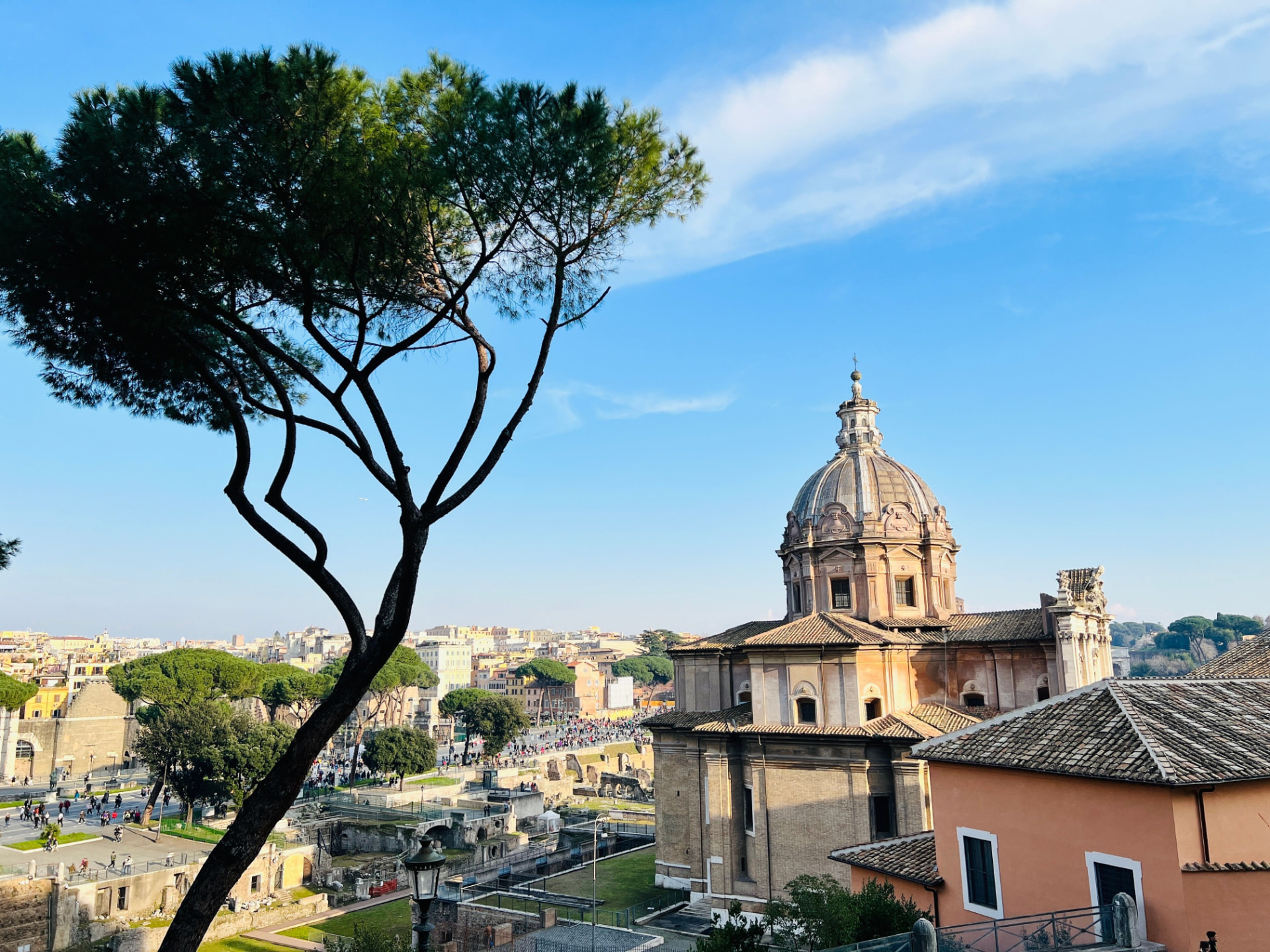
One combined ticket covers all three and is valid across 24 hours, but the Colosseum entry is timed and sells out days ahead in season — book on the official site the moment your dates are fixed. Go at opening or in the last two hours. The arena-floor and underground add-ons are worth it if you care about how the machinery worked; if you don't, the standard ticket sees plenty. Then walk the Forum uphill to the Palatine for the view down over it, and finish on the Capitoline terrace behind Piazza del Campidoglio, which is free and gives the best overview shot of the whole site.
Baroque centre: Pantheon, Navona, Trevi
The Pantheon is the best-preserved building of ancient Rome and now requires a small paid ticket; the oculus at midday and the interior at opening are two completely different rooms. Piazza Navona is Bernini versus Borromini in one square. The Trevi Fountain is genuinely spectacular and genuinely mobbed — 7am or after 11pm, no compromise. Add the Spanish Steps, Piazza del Popolo, and the Caravaggios in San Luigi dei Francesi and Santa Maria del Popolo, both free.
Vatican: Museums, Sistine Chapel, St Peter's
Book the Vatican Museums with a timed slot, aim for the first entry of the day, and accept that the route to the Sistine Chapel is long and crowded. St Peter's Basilica itself is free with a security queue and a strict dress code — shoulders and knees covered, no exceptions. The dome climb (551 steps, or take the lift to the roof and climb the last 320) is the best view in Rome. Combine with Castel Sant'Angelo across the river for a second terrace and far fewer people.
Trastevere, Aventine and the slower Rome
Trastevere in the morning — before the bars fill — is the prettiest ordinary neighbourhood in the city, with Santa Maria in Trastevere's mosaics glowing gold. Climb the Gianicolo for a panorama over the rooftops. On the Aventine, queue for the keyhole at the Knights of Malta gate (St Peter's dome framed by a hedge tunnel) and sit in the orange garden next door.
Half-day trips inside the city
Villa Borghese for the Galleria Borghese's Bernini sculptures (timed two-hour slots, book ahead — it's the most underrated ticket in Rome). Appian Way on a Sunday, when it's closed to traffic, for catacombs and Roman paving under umbrella pines. Ostia Antica, 40 minutes by train, is a full Roman port town you can walk into with a fraction of Pompeii's crowds.
Photography notes
The Forum wants early morning light from the Capitoline terrace or late afternoon from the Palatine; midday flattens it completely. The Pantheon's portico and the Trevi Fountain are both best at blue hour, when the floodlights balance with the sky for about fifteen minutes. Bring a fast wide lens rather than a tripod: tripods are restricted or banned inside most sites and churches, and the Sistine Chapel bans photography entirely — it's enforced.
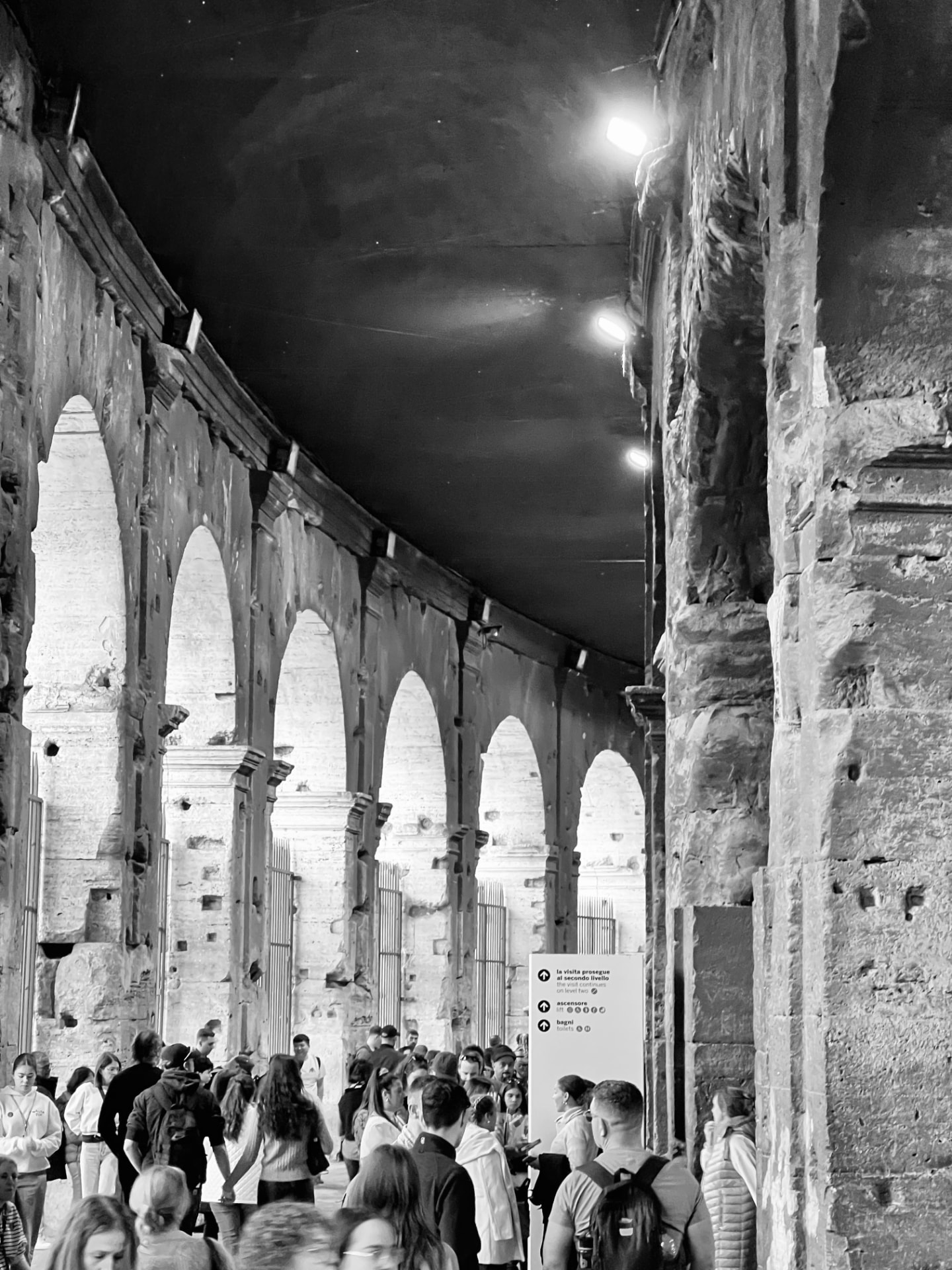
For crowds, either accept them as part of the frame (the black-and-white arcade shot above) or shoot tight and up, where there are no heads. And be clear about drones: central Rome is dense restricted airspace with no-fly zones over the historic centre and the Vatican, so plan aerial work outside the city and register properly first — I break down how the EU rules actually work in my EASA Open Category guide.
Eating in Rome like a local
Roman cooking is short on ingredients and strict about them. The four pastas to know: cacio e pepe (pecorino, pepper), carbonara (egg, pecorino, guanciale — never cream), amatriciana (tomato, guanciale, pecorino) and gricia (carbonara without the egg). Add carciofi alla giudia (fried artichokes) in spring, supplì (fried rice balls) any time, pizza al taglio sold by weight for lunch, and Roman pizza at dinner — thin and crisp, not Neapolitan.
The rituals matter more than the restaurant lists. Coffee is drunk standing at the bar for around €1.20; sitting at a table costs several times more, and no Roman orders a cappuccino after eleven. Lunch is 1–3pm, dinner starts at 8pm and a restaurant that's empty at 7 is not a bad restaurant. Aperitivo is roughly 6.30–8. Expect a small coperto cover charge per person; tipping beyond rounding up is not expected.
Avoiding tourist traps is mostly mechanical: walk three or four streets away from any major monument, skip anywhere with a photo menu, a multilingual greeter outside, or a menu offering carbonara and lasagne and pad thai. Testaccio, Monti, the far side of Trastevere and Prati away from the Vatican walls all eat well. And drink the tap water — the nasoni street fountains run cold and free all over the city, which in July is worth more than any restaurant reservation.
How to experience Rome like a local
Stay in a neighbourhood, not next to a monument. Monti is central, walkable and full of small bars; Testaccio is the food district with almost no tourists; Trastevere is atmospheric but loud at night; Prati is calm, well-connected and good value near the Vatican. Avoid the streets immediately around Termini for anything other than an early train.
Then adopt the rhythm. Romans are out early and out again late, and they take the middle of the day slowly. Do the market at Campo de' Fiori or Testaccio in the morning, sit in a piazza with a coffee rather than queuing for another site, take the evening passeggiata along the Tiber or through Trastevere, and eat late. Learn buongiorno, per favore, grazie and il conto — it changes how you're treated more than fluent English does. Cover your shoulders and knees for churches, keep your voice down inside them, and remember that Sunday morning is for mass, not tourism, in the working parish churches.
A 3-day Rome itinerary
Day 1 — Ancient Rome
Early Colosseum slot, then the Forum and Palatine on the same ticket. Lunch in Monti. Afternoon: Capitoline terrace for the overview, Capitoline Museums if you have energy, then Piazza Venezia and the imperial forums at golden hour. Dinner in Monti.
Day 2 — Baroque centre
Pantheon at opening, then Piazza Navona, the Caravaggios at San Luigi dei Francesi, pizza al taglio for lunch, Trevi and the Spanish Steps in the afternoon, Villa Borghese or the Galleria Borghese slot late afternoon. Aperitivo near Campo de' Fiori, dinner in the centre, Trevi again at 11pm when it's nearly empty.
Day 3 — Vatican and Trastevere
First entry at the Vatican Museums, Sistine Chapel, St Peter's and the dome climb. Cross to Castel Sant'Angelo, then walk into Trastevere for a long late lunch. Sunset from the Gianicolo. Dinner in Trastevere or Testaccio.
Days 4–5 if you have them
Ostia Antica or the Appian Way, the Aventine keyhole and orange garden, Basilica di San Clemente's three levels, the Baths of Caracalla, and a half-day in Testaccio eating properly.
Practical tips for visiting Rome
- Book the Colosseum, Vatican Museums and Galleria Borghese on their official sites as soon as dates are fixed. Third-party "skip-the-line" resellers mostly sell you the same timed ticket with a markup.
- The Roma Pass makes sense only if you'll use public transport heavily and visit several paid museums; for a classic three-day first visit, individual timed tickets usually cost less.
- Pickpockets work the 64 and 40 buses, metro line A and the crowd at Termini — front pockets, zipped bags, nothing in a back pocket. Violent crime is rare.
- Wear shoes with real soles. Roman sampietrini cobbles destroy thin trainers and sandals over 20,000 steps a day.
- In summer, plan shade: the Forum, Palatine, Appian Way and Ostia have almost none. Carry a refillable bottle for the nasoni.
- Cards are accepted almost everywhere, but keep €20–30 in cash for small bars, markets and the coperto at old-school trattorias.
- Left luggage at Termini is easy and cheap if you have a late flight — don't drag bags around the centre.
Rome FAQ
How many days do you need in Rome?
Three full days covers ancient Rome, the Baroque centre and the Vatican without sprinting. Four or five lets you add Ostia Antica, the Appian Way and time to sit still, which is when Rome actually starts to land.
Is the Roma Pass worth it?
Only for transport-heavy, museum-heavy trips. If your list is Colosseum, Vatican and a couple of churches, buying tickets individually is cheaper and gives you better time slots.
Do I need to book Colosseum tickets in advance?
Yes. Entry is timed and capped, and in spring through autumn slots sell out days ahead. Book on the official ticketing site rather than a reseller.
Is Rome worth visiting in August?
It's the hardest month — 35°C, peak crowds, and many local businesses closed around Ferragosto. Go if that's your only window, but shift your day early and late and build in an indoor break at midday.
Where should I stay in Rome for the first time?
Monti for central and characterful, Prati for calm and good value, Trastevere for atmosphere if noise doesn't bother you, Testaccio if food is the point. Skip the area right at Termini.
Is Rome walkable?
Very. The historic centre is roughly 3km across and most of the headline sights sit inside it. You'll want the metro or a tram for the Vatican, Ostia, EUR and the Appian Way.
Is Rome safe for tourists?
Yes, broadly — the realistic risk is pickpocketing on crowded buses and around Termini, plus overpriced restaurants next to monuments. Normal city awareness is enough.
Bottom line
Come in late September or October, stay in a neighbourhood rather than next to a ruin, book three timed tickets and leave the rest of the day loose. Shoot the Forum from the Capitoline at first light and the Pantheon at blue hour, drink your coffee standing up, and eat dinner at eight. If you're pairing Rome with the north of Italy, my one-week Dolomites road trip itinerary and the Tre Cime di Lavaredo guide cover the mountains at the other end of the country.
Planning a destination feature, hotel shoot or campaign in Italy? Get in touch — I work on commission across Europe.