Wrocław Travel Guide: History, Dwarfs & What to Visit
A photographer's Wrocław guide — the Rynek, Ostrów Tumski, the story behind the dwarfs, the best months to visit, what to eat and a practical 2-day plan.
Wrocław is the most layered city in Poland, and the one that surprises first-time visitors the most. It has been Polish, Bohemian, Austrian, Prussian, German and Polish again — and all of those layers are still standing in the same square kilometre. Add a river braided into a dozen islands, more than a hundred bridges, a hundred thousand students and several hundred bronze dwarfs hiding at ankle height, and you get a city that rewards slow walking more than any list of landmarks can suggest.
I've photographed Wrocław in grey January drizzle and in the gold of a late August evening, and both versions work. This is a working guide: the history that makes the old town legible, why the city deserves two or three days, the dwarfs and how to hunt them, what to visit, when to come, what to eat and the practical details that keep a good trip cheap.
Why Wrocław is a must-visit city in Poland
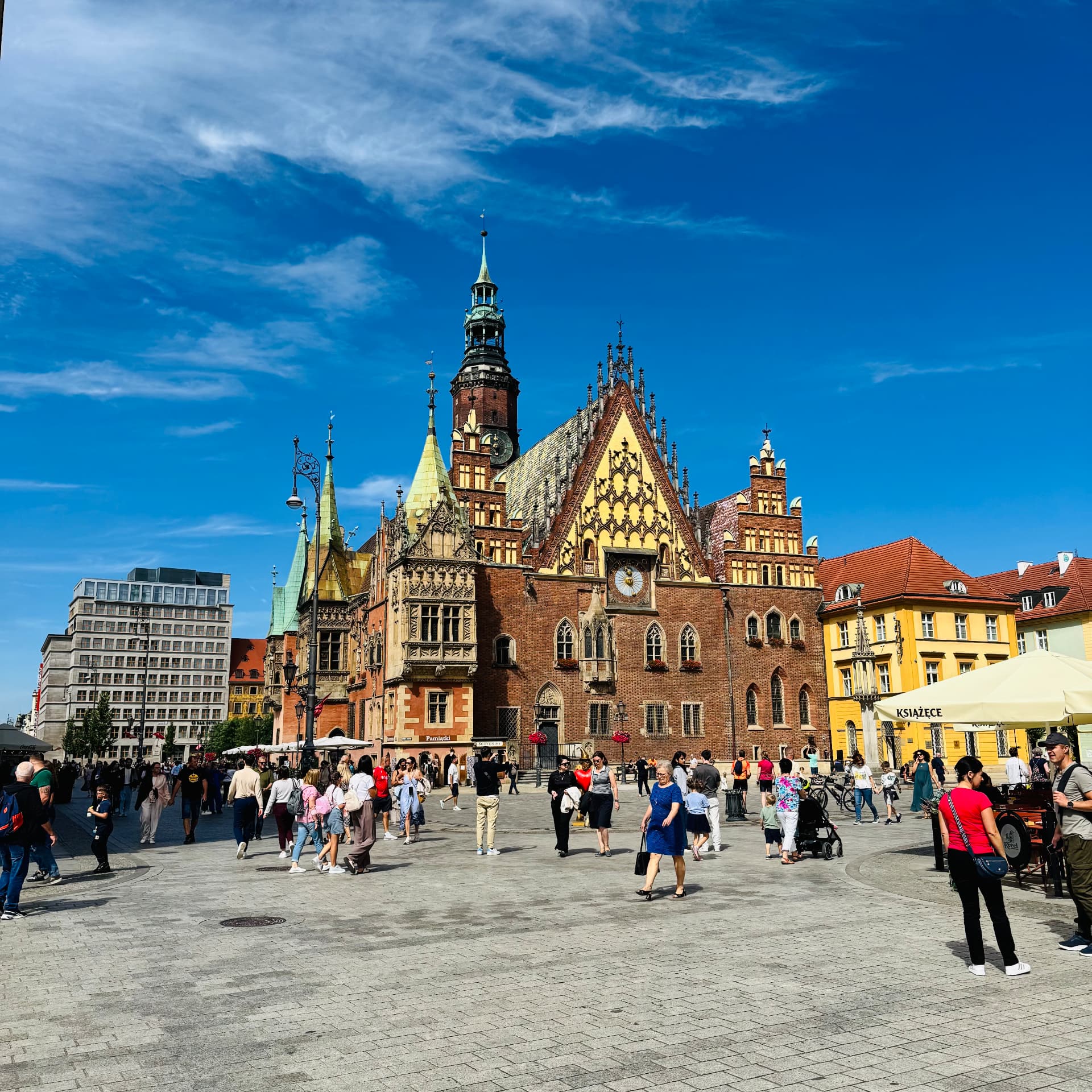
- The market square is the best in Poland. The Rynek is bigger and busier than Poznań's and, unlike Kraków's, it's ringed by individually coloured gabled houses rather than one continuous façade.
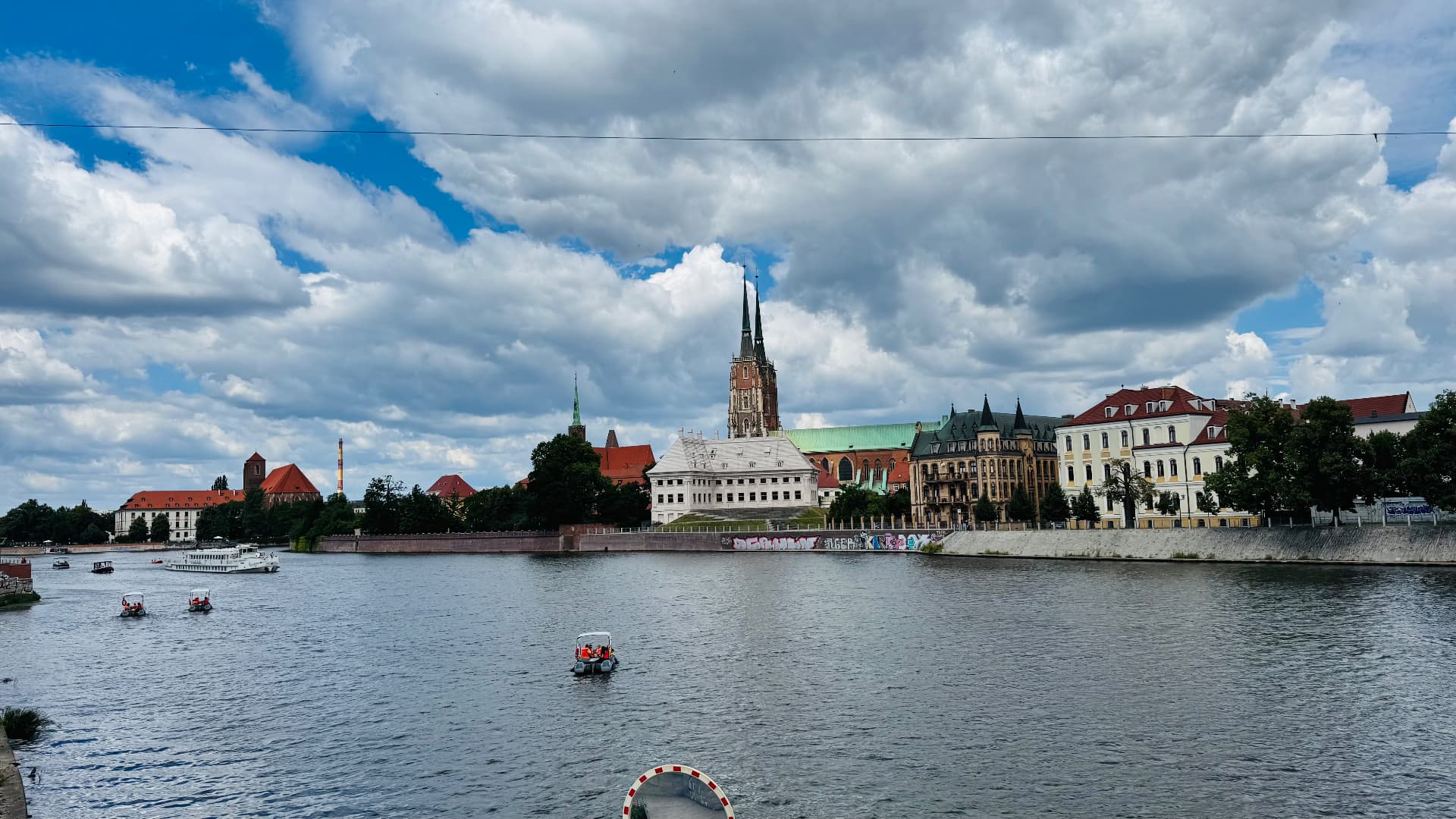
- It's a river city. The Odra splits into channels around a dozen islands, crossed by well over a hundred bridges. Few European cities of this size have as much water in the centre.
- The history is genuinely European. Piast Poland, Bohemian kings, Habsburg Vienna, Prussian Breslau, the 1945 siege, and the arrival of Poles displaced from Lwów — all visible in the buildings.
- It's a student city. Over 100,000 students keep the bars, bakeries, coffee roasters and music venues honest and affordable.
- It costs less than Kraków. Hotels and restaurants in the centre are usually noticeably cheaper for the same quality.
- It's easy to reach. Direct trains from Berlin, Kraków, Warsaw and Poznań, plus a compact airport 10 km from the centre.
- The dwarfs. Sounds like a gimmick. Isn't. More on that below.
A short history of Wrocław you can actually see
Wrocław's past is easier to hold onto when each era is attached to a place you can stand in.
Piast beginnings on Ostrów Tumski (10th–13th century)
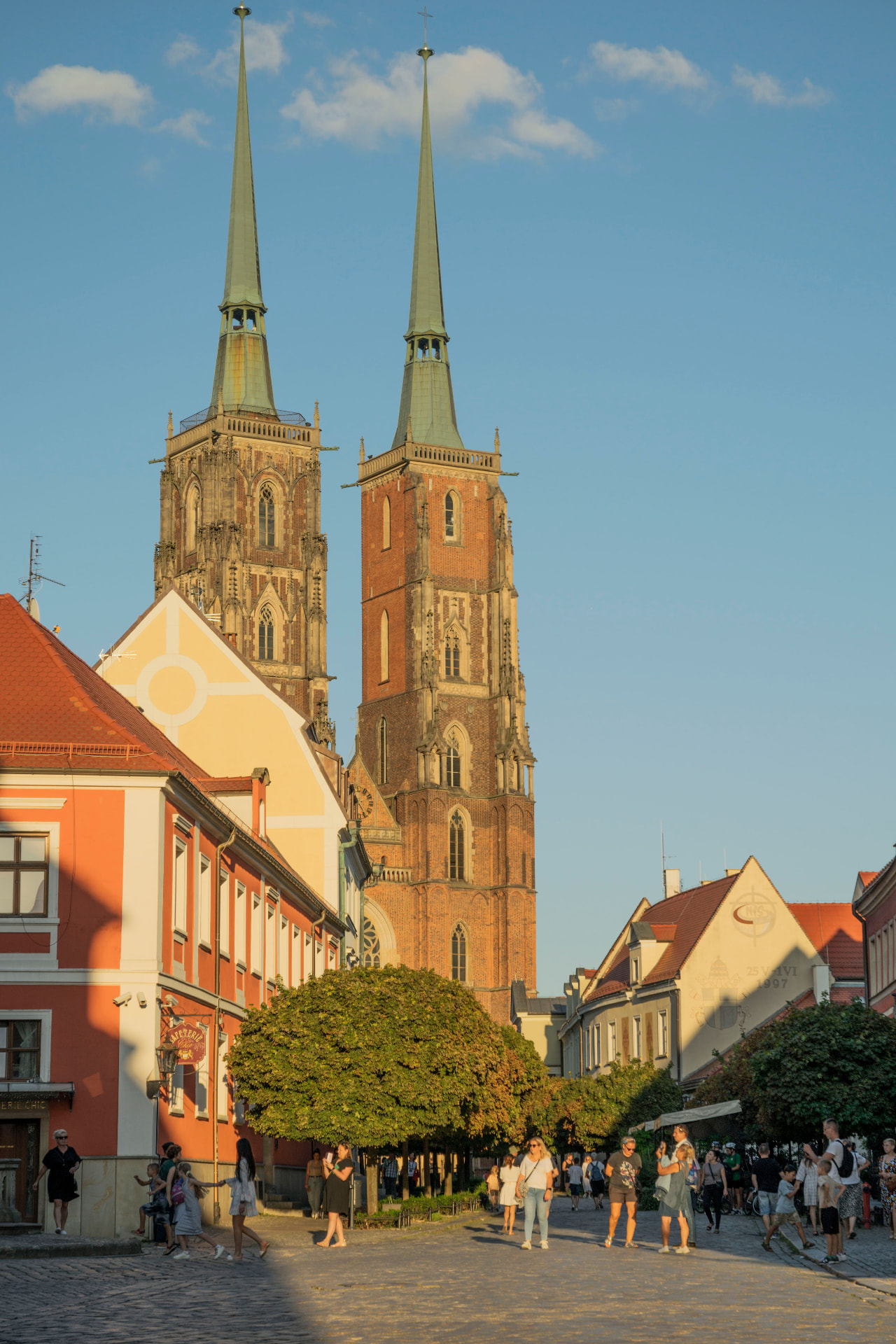
The city started as a settlement on an island in the Odra. A bishopric was founded here in the year 1000, and the Cathedral of St John the Baptist still marks the spot. Ostrów Tumski — Cathedral Island, no longer technically an island — is the oldest part of Wrocław and the quietest part of the centre.
Bohemian and Habsburg rule (14th–18th century)
After the Piast line in Silesia faded, the city passed to the Kingdom of Bohemia and later to the Habsburgs. This is when the Rynek, the Old Town Hall and the great Gothic brick churches took the shape you see today — a Central European city governed from Prague and Vienna rather than Kraków.
Prussian Breslau (1741–1945)
Frederick the Great took Silesia in the 1740s, and for the next two centuries the city was Breslau: a Prussian and then German metropolis, the sixth-largest city in Germany by 1900. That era gave Wrocław its ring of brick tenements, its grand railway station, the university's Baroque halls, the Centennial Hall and the Racławice Panorama building's neighbours.
Festung Breslau, 1945
In the final months of the war the city was declared a fortress and defended for almost three months. Roughly two-thirds of it was destroyed, and much of the old town was rubble. Understanding this makes the Rynek more impressive, not less: those painted façades are careful reconstructions.
A new population, and a new name (1945 onwards)
Borders moved west. The German population left or was expelled, and Poles displaced from Lwów (now Lviv) arrived, bringing their university, their museum collections and the Racławice Panorama with them. Wrocław became a Polish city with almost entirely new inhabitants — which is why the city talks about its history so openly and so carefully.
The 1997 flood and the modern city
The Millennium Flood put large parts of Wrocław under water and is still a reference point in local memory. The recovery, the university boom, and the year as European Capital of Culture in 2016 turned it into one of the most confident cities in Poland.
The Wrocław dwarfs (krasnale) — the real story
You will see them within ten minutes of reaching the Rynek: bronze figures the size of a shoe, playing instruments, pushing a ball, sleeping, withdrawing cash from an ATM. Tourists photograph them because they're charming. They exist because of something braver than that.
In the 1980s, an anti-communist protest movement called the Orange Alternative (Pomarańczowa Alternatywa) ran absurdist happenings in Wrocław's streets. When the authorities painted over anti-government graffiti, activists painted little gnomes on the fresh grey patches. It was mockery that was almost impossible to prosecute — arresting someone for a cartoon dwarf makes the state look ridiculous.
The first bronze dwarf, Papa Krasnal, was placed on ul. Świdnicka in 2001 as a memorial to that movement. In 2005 the city commissioned a small group of them, and since then businesses, institutions and residents have kept adding more. There are now several hundred — commonly quoted as 600 or more, and still growing.
How to hunt dwarfs
- Start on the Rynek. Half a dozen are within one lap of the square, including the ones climbing lamp posts and pushing a giant ball.
- Get a map or app. Free paper maps are sold in kiosks and souvenir shops for a couple of złoty, and there are phone apps that track which ones you've found — perfect if you're travelling with kids.
- Look low and look at doorways. They sit at pavement level, often beside the business that sponsored them: a bank dwarf at an ATM, a baker dwarf outside a bakery, a prisoner dwarf behind bars.
- Notice the meaningful ones. A group near ul. Świdnicka represents disabled residents — a dwarf in a wheelchair, a blind dwarf, a deaf dwarf signing — placed to make accessibility visible in the city centre.
- Photographing them: get the camera on the ground and shoot at their eye level with a wide lens, including the street behind. Waist-height snapshots all look the same.
Two or three hours of dwarf hunting is one of the best ways to see neighbourhoods you'd otherwise skip. That's the real trick of it. For the full story — the Orange Alternative history, the notable dwarfs, the September festival and where to find them — see my guide to the Wrocław dwarfs.
What to visit in Wrocław
The Old Town and the Rynek
The Rynek and its Old Town Hall are the obvious start. Walk the full perimeter, then duck into the Jaś i Margosia houses and the adjoining Plac Solny flower market, which stays open late. Climb the tower of St Elizabeth's Church for a rooftop view over the square. Don't miss the small covered passage of Jatki, the old butchers' lane, with its bronze animal memorial.
Ostrów Tumski and Sand Island
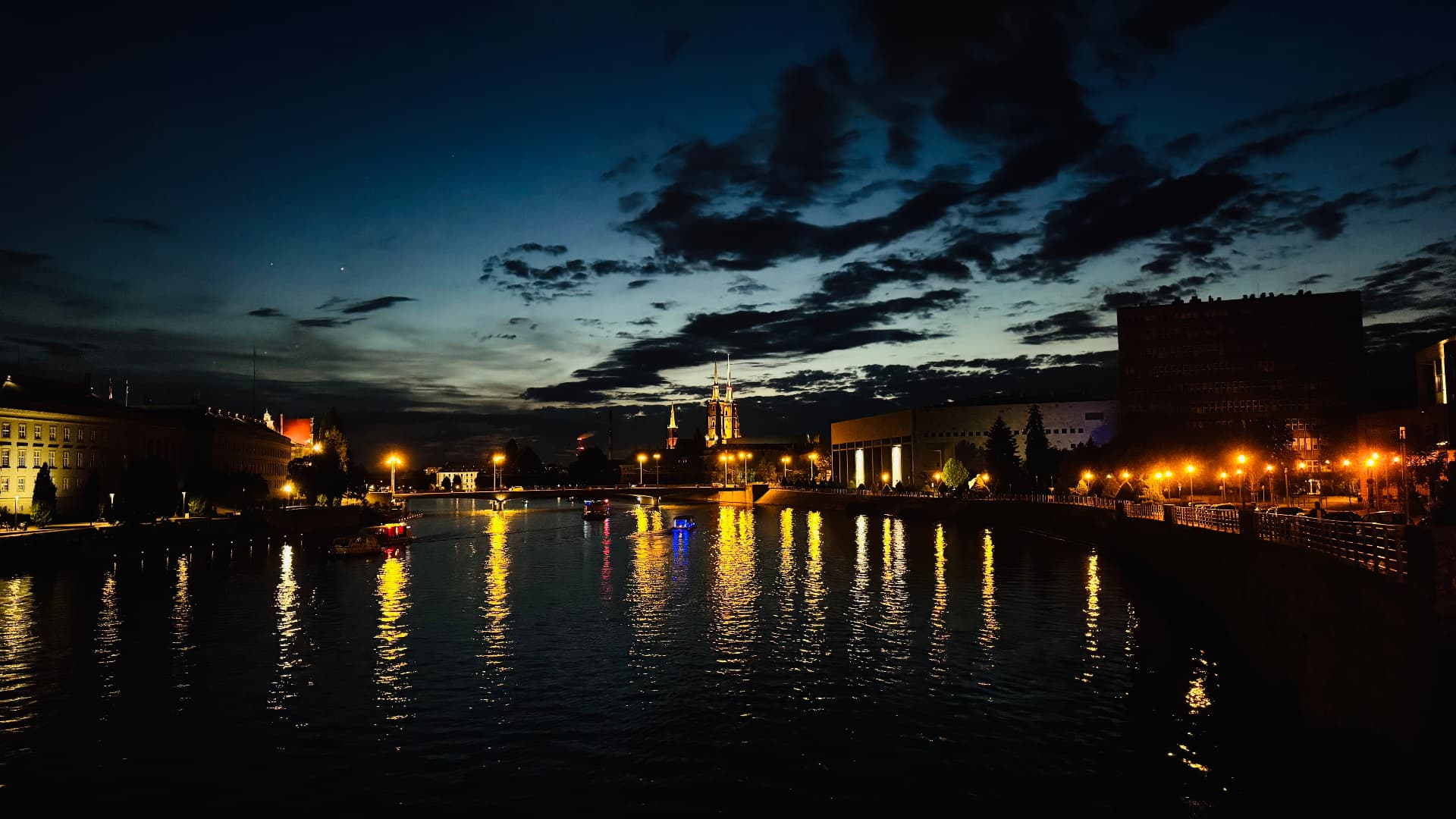
Cross Most Tumski (the padlock bridge) to the cathedral quarter. Take the lift up the cathedral tower, visit the Church of the Holy Cross, and walk the Botanical Garden if it's open. Come back at dusk: a lamplighter in period dress still lights the gas lamps on Ostrów Tumski by hand every evening, year-round.
The University quarter
The main university building on the Odra hides the Aula Leopoldina, a Baroque assembly hall that is genuinely one of the most beautiful interiors in Poland, plus the Oratorium Marianum and the Mathematical Tower with a river view. Cheap ticket, low crowds, high payoff.
Racławice Panorama
A 15 × 114 m circular painting of the 1794 Battle of Racławice, brought from Lwów and housed in a purpose-built rotunda. Timed entry with an audio guide; book ahead in summer. Your ticket usually also covers the National Museum next door.
Centennial Hall, the fountain and the parks
East of the centre, the UNESCO-listed Centennial Hall (Hala Stulecia, 1913) is a landmark of early reinforced-concrete architecture. Beside it are the Multimedia Fountain with evening light-and-music shows in the warm months, the excellent Japanese Garden, and Wrocław Zoo with its Afrykarium — the best-known family attraction in the city.
Neighbourhoods worth an hour
Nadodrze for painted courtyards, craft workshops and coffee; Hala Targowa for the 1908 market hall and cheap food; ul. Świdnicka and Plac Kościuszki for communist-era architecture and the Konspira bar-museum of the Solidarity years.
Day trips
- Książ Castle — the third-largest castle in Poland, about 70 km south, with wartime tunnels underneath.
- Świdnica Church of Peace — a UNESCO-listed timber Protestant church, easily combined with Książ.
- Karkonosze mountains — two hours south for hiking, and my Szklarska Poręba guide covers the trails.
Best time to visit Wrocław
Wrocław works year-round, but the months are very different.
- May–June: my favourite. Long light, warm evenings on the river, everything open, crowds still moderate.
- July–August: warmest and busiest. Festivals, boats, outdoor cafés and the fountain shows; also occasional heat and higher hotel prices.
- September: the sweet spot if you don't need swimming weather — students return, the city feels alive, prices soften.
- October–November: grey and often wet, but the brick architecture looks superb in flat light and the city is cheap.
- December: the Christmas market on the Rynek is one of Poland's best. Busy weekends, higher room rates, worth it.
- January–February: cold, quiet and the cheapest time to come. Museums and the Aula Leopoldina are the right plan.
- Easter and long weekends: book accommodation early; Polish city breaks fill up fast.
Whatever month you pick, be on Ostrów Tumski at dusk. The gas lamps make it the best twenty minutes of the day.
Getting to Wrocław and getting around
Getting there
- By air: Wrocław Airport (WRO) is 10 km west of the centre, with budget and regional connections across Europe. Bus 106 and airport shuttles reach the centre in around 30–40 minutes.
- By train: direct services from Berlin (about 4.5 hours), Kraków (3–4 hours), Warsaw (3.5–4 hours), Poznań (2–2.5 hours) and Gdańsk. Book PKP Intercity tickets a few weeks out for the cheapest fares.
- By car: the A4 runs east–west (Kraków to the German border) and the S8 north-east towards Warsaw. Roads are good; parking in the old town is not.
- Wrocław Główny is itself worth two minutes of your attention — a restored 19th-century station that looks like a small castle.
Getting around
The historic centre is walkable end to end in about 25 minutes, so you don't need a car. Trams and buses cover everything else; buy tickets from machines on board or with an app such as jakdojade or mPay, and validate them. Bikes and e-scooters are everywhere and the riverbank paths are flat. If you're driving, park at a park-and-ride or a garage outside the ring and leave the car there.
Photography notes
- The Rynek: the painted façades take direct light well in the first two hours after sunrise, and the square is empty then. Midday is flat and crowded.
- The cathedral: late afternoon light hits the brick towers straight on from the western approach — the frame above.
- Night reflections: shoot from Most Pokoju, Most Grunwaldzki or the Wyspa Słodowa embankments. Bring something to brace the camera on; a small travel tripod is enough.
- Grey days are not wasted. Flat winter light suits brick, and the Nadodrze courtyards and Hala Targowa interiors are better without contrast.
- Drones: central Wrocław sits in controlled airspace with restrictions, and the old town is dense and busy. Check the zone in the Polish DroneRadar/PansaUTM app before you fly and expect the centre to be off limits — my EU drone rules guide explains how the Open category works in practice.
Eating and drinking in Wrocław
- Pierogi and Silesian classics. Silesian dumplings (kluski śląskie) with roast meat and red cabbage, żurek in a bread bowl, placki ziemniaczane. Look one street off the Rynek for better prices.
- Milk bars (bar mleczny). Canteen-style, no-frills, absurdly cheap, and still where locals eat lunch. Point at what looks good.
- Hala Targowa. Fruit, cheese, bread and cheap hot food under a 1908 concrete-and-brick roof.
- Craft beer. Wrocław has a strong brewpub scene — plus Spiż brewing under the Old Town Hall itself.
- Konspira. A bar-restaurant themed on the 1980s underground: decent food, and the most painless history lesson in town.
- Coffee. Nadodrze and the university quarter have the best roasters. Cards work everywhere; tipping around 10% in a sit-down restaurant is normal and never required.
A 2-day Wrocław plan
Day 1 — Old Town and dwarfs
Coffee near the Rynek before 8am and photograph the square while it's empty. Old Town Hall, Plac Solny, Jatki, then climb St Elizabeth's tower. Lunch in a milk bar or at Hala Targowa. Afternoon: dwarf hunt with a map, working outwards to ul. Świdnicka and Plac Kościuszki, with a stop at Konspira. Evening: Aula Leopoldina if it's still open, then dinner and a brewpub.
Day 2 — Islands, river and Ostrów Tumski
Morning at the Racławice Panorama with a timed ticket, then the National Museum next door. Walk the riverside to Wyspa Słodowa and Sand Island, cross Most Tumski to Ostrów Tumski, and take the cathedral tower lift for the wide view. Late afternoon: a boat trip or pedal boat on the Odra. Be back on Ostrów Tumski for the lamplighter at dusk, then shoot the river reflections from Most Pokoju.
Day 3, if you have it
Centennial Hall, the Japanese Garden and the Multimedia Fountain, plus the zoo and Afrykarium if you have kids — or head south for Książ Castle and the Świdnica Church of Peace.
Practical tips
- Money: Poland uses the złoty (PLN). Cards and phone payments work almost everywhere; keep a few coins for a dwarf map or a church tower. Refuse currency conversion at ATMs.
- Sunday closures: most shops are shut on Sundays. Restaurants, cafés and museums are open; supermarkets mostly aren't.
- Safety: Wrocław is a safe city. Standard care around the station at night and on busy weekend nights near the Rynek is enough.
- Luggage: lockers at Wrocław Główny make a day-trip stopover easy.
- Language: English is widely spoken by younger people. Learn dzień dobry, dziękuję and przepraszam anyway — it changes how you're treated.
- Shoes: the whole old town is cobbled and often wet. Bring something with grip.
- With kids: dwarfs, the fountain, the zoo and a pedal boat will carry two full days on their own.
Frequently asked questions
How many days do you need in Wrocław?
Two full days cover the old town, Ostrów Tumski and the Panorama comfortably. Three lets you add Centennial Hall, the zoo or a castle day trip without rushing.
Is Wrocław worth visiting?
Yes — and more so if you've already done Kraków and Warsaw. You get the best market square in the country, a genuinely multinational history, a river-and-islands centre, and lower prices than either.
Wrocław or Kraków?
Kraków has the bigger monuments and the Wawel–Kazimierz–Auschwitz weight of history, and the crowds that come with it. Wrocław is cheaper, calmer, more of a working city, and better for a first-time visitor who wants to walk rather than queue. If you have a week, do both — the train takes 3–4 hours.
Why does Wrocław have dwarfs, and how many are there?
They commemorate the Orange Alternative, the absurdist anti-communist protest movement that painted gnomes over censored graffiti in the 1980s. The first bronze one arrived in 2001; there are now several hundred, commonly cited as 600 or more.
What's the best month to visit Wrocław?
May, June or September. December is worth it for the Christmas market; January–February is the cheapest.
Is Wrocław walkable?
Very. You can cross the historic centre in under half an hour, and everything else is a short tram ride away.
Can you visit Wrocław as a day trip from Berlin or Prague?
Technically yes from Berlin (about 4.5 hours each way by train), but you'd see the Rynek and little else. Stay one night at minimum, two if you can.
The bottom line
Wrocław gives you a great square, a river full of islands, a Baroque hall most visitors never open the door to, and a city-wide treasure hunt that started as political protest. It costs less than the obvious Polish cities and asks less of your patience. Pair it with Poznań to the north or Gdańsk and Sopot on the coast for a proper Poland trip, and if you want mountains, add a few off-grid nights in the Sudetes.
Planning a shoot or a campaign in Poland? Get in touch — I photograph and film these places for a living.